
Pruning
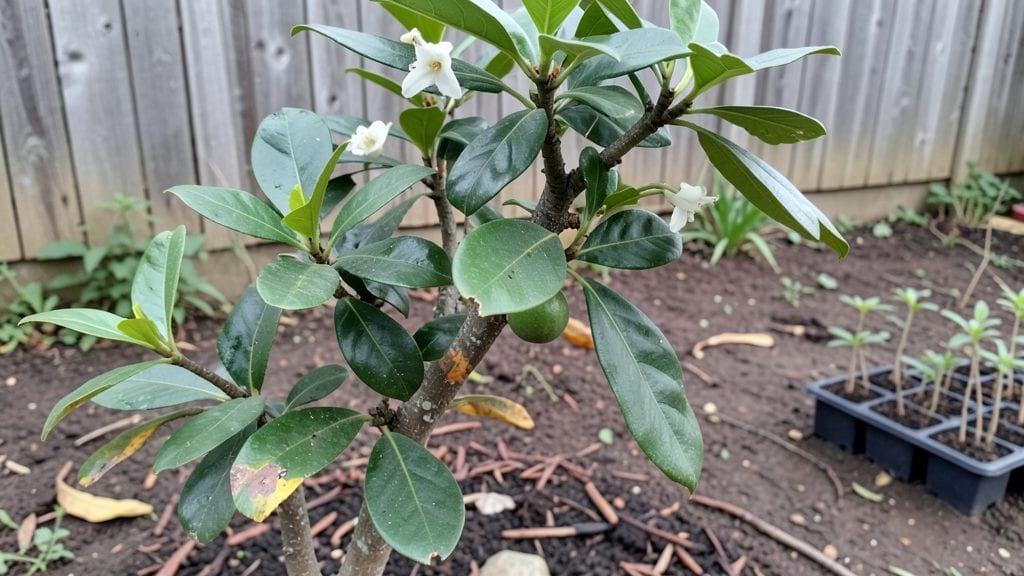
Growing agar tree seeds gives you a fast-growing privacy screen that outperforms anything you’d buy at a nursery. I’ve watched mine shoot up 12 inches in a single season, their glossy leaves forming a dense, wind-resistant barrier by year three.
The secret isn’t just patience—it’s knowing how to coax those tiny seeds into sprouting reliably, because even the most eager gardeners hit a wall when germination stalls.
You’ll need three things to start: a warm spot (like a sunny windowsill or heat mat), a moistened seed-starting mix that drains well, and a clear plastic bag to create humidity. Most people overlook the pre-soaking step—soaking seeds for 24 hours doubles your success rate.
Once they sprout, you’ll have week-old seedlings ready to transplant into the ground or larger containers, where they’ll keep growing without fuss.
By late summer, you’ll have a 6-foot-tall living wall that stays green year-round, blocks noise, and attracts birds. The leaves stay vibrant even in drought, and the tree’s natural shape means no pruning headaches.
The only catch? Plant them in full sun—they’ll reward you with fast, lush growth if you give them what they need.
Works in zones 7-11, though young trees may need winter protection in colder areas. Here’s how to avoid the pitfalls that trip up beginners—like overwatering or planting too deep—and keep your screen thriving for decades.
📚 In This Guide
- What you need
- Instructions
- Tips and common mistakes
- Wrapping up and next steps
What you need
- ● Agar tree seeds – 10–20 high-quality seeds (ensure they’re fresh for best germination rates).
- ● Seed-starting mix – 1–2 gallons of well-draining, sterile potting soil (e.g., cactus/succulent mix or a 50/50 blend of peat moss and perlite).
- ● Small seed trays or pots – 4–6 biodegradable or plastic pots (3–4 inches in diameter) or a seed tray with drainage holes.
- ● Clear plastic domes or plastic wrap – To create a humid microclimate for germination.
- ● Spray bottle – For gentle watering (avoid over-saturating the soil).
- ● Grow lights or sunny windowsill – Agar tree seedlings thrive in bright, indirect light (6–8 hours daily).
- ○ Humidity tray or pebble tray – Optional but helpful for maintaining moisture levels.
- ● Pruning shears (small, sharp pair) – For future maintenance (though not needed initially).
- ● Seed germination heat mat – Speeds up germination (ideal temp: 75–85°F).
- ● pH test kit – Ensures soil pH is slightly acidic (5.5–6.5).
- ● Fertilizer (balanced, water-soluble) – For early seedling nutrition (dilute to half-strength).
- ● Transplanting pots (6–8 inches) – Once seedlings are 3–4 inches tall.
- ● Mulch (wood chips or bark) – For outdoor planting once mature.
Step-by-step instructions for growing agar tree seeds
Here’s how to get your agar tree seeds sprouting quickly and thriving into a dense, fast-growing privacy screen.
Prepare the Seeds for Faster Germination
Agar tree seeds have a tough outer coating that slows germination, so I always start with a 24-hour soak in lukewarm water to soften it. Place the seeds in a small bowl or jar, cover them with enough water to submerge them completely, and let them sit at room temperature. You’ll know they’re ready when the outer shell softens slightly—usually after 12-18 hours, though some may take longer.
After soaking, drain the water and gently rub the seeds between your fingers to remove any remaining outer layer. This step ensures they won’t sit dormant for weeks. Once prepped, they’re ready for planting within 24 hours—don’t let them dry out again before sowing.
Choose the Right Soil and Planting Location
Agar trees thrive in well-draining, slightly acidic soil with a pH between 5.5 and 6.5. Mix 2 parts potting soil with 1 part perlite or coarse sand to improve aeration—this prevents root rot, which is a common issue with fast-growing seedlings. Fill your containers or garden bed with this blend, ensuring the soil is moist but not soggy before planting.
For best results, plant seeds ¼ inch deep in well-spaced rows—about 6 inches apart—since agar trees grow quickly and need room to establish. If planting in a garden, choose a spot with partial shade to full sun, as direct afternoon sun can stress young seedlings. Water the soil lightly after planting to settle it around the seeds.
Provide Warmth and Consistent Moisture
Agar tree seeds germinate fastest at 70-75°F, so I use a seedling heat mat or place the containers in a warm, sheltered spot like a greenhouse or sunny windowsill. Keep the soil evenly moist—not waterlogged—by misting lightly every 2-3 days or when the top inch feels dry. Overwatering can cause damping-off, a fungal disease that kills seedlings overnight.
You’ll see first sprouts in 7-14 days, depending on temperature and humidity. Once they emerge, remove the heat mat (if used) and move them to a bright, indirect light spot. Avoid direct sun until seedlings are 2-3 inches tall—this prevents leaf scorch. Thin weaker seedlings to leave the strongest 4-6 inches apart for optimal growth.
Transplant and Maintain for Rapid Growth
When seedlings reach 4-6 inches tall (usually 6-8 weeks after sowing), transplant them to their final location. Agar trees grow quickly, so choose a spot with 6-8 feet of space between plants for a dense privacy screen. Dig holes twice as wide as the root ball and slightly deeper to encourage root spread. Water deeply after transplanting to help roots establish.
Once established, agar trees need regular watering—about 1 inch per week—but they’re drought-tolerant once mature. Fertilize lightly with a balanced, slow-release fertilizer in early spring to support fast growth. Prune lightly in late winter to shape the tree and encourage bushier growth, but avoid heavy pruning until the plant is 2-3 years old.
Monitor for Pests and Adjust Care as Needed
Agar trees are generally pest-resistant, but watch for aphids or spider mites on young leaves. If you spot them, spray with neem oil or a soapy water solution to keep infestations in check. Yellowing leaves usually mean overwatering or poor drainage—adjust your watering schedule if the soil stays soggy for more than a day.
Within 2-3 years, your agar trees will grow into a lush, fast-growing privacy screen, providing year-round greenery with minimal maintenance. The key is keeping them well-watered but not waterlogged and giving them space to spread. With these steps, you’ll have a thriving screen in record time.
Tips & tricks for perfect agar tree seed germination
Getting agar tree seeds to sprout quickly requires precision in timing and conditions—here's how to maximize your success without common pitfalls.
Seed Preparation Timing: The 24-hour soak at room temperature is non-negotiable for breaking that tough outer coating. I've found that using lukewarm water (around 75°F) speeds up the softening process—you'll notice the shells become pliable after just 12-18 hours, though I always let them soak the full 24 hours for consistency. Pro tip: Place a small plate under your soaking container to catch any seeds that might float to the surface during the process.
Soil Mix Secrets: The 2:1 ratio of potting soil to perlite isn't just about drainage—it's about creating the perfect air-to-moisture balance. I recommend sifting your potting soil first to remove any large clumps, then mixing in the perlite by hand to distribute it evenly. This prevents pockets of poor drainage that could lead to damping-off disease. For even faster results, consider adding a handful of worm castings to your soil mix—they introduce beneficial microbes that boost early root development.
Germination Environment: Maintaining that 70-75°F range is crucial, but don't rely solely on your thermostat. I use a small seedling heat mat under my planting trays and monitor temperature with a digital thermometer placed at soil level. The key is consistency—temperature fluctuations can cause seeds to either sit dormant or germinate unevenly. If your home tends to be cooler, place your trays on top of the refrigerator or near a sunny window (but not in direct sun) to create a microclimate.
Transplanting Strategy: When your seedlings reach that 4-6 inch mark (typically around 6-8 weeks), I recommend hardening them off for 3-4 days before transplanting. This means placing them outdoors in their final location for progressively longer periods each day. The goal is to let them acclimate to wind and temperature variations without shock. For larger plantings, I mark my transplant locations with stakes before digging—this prevents overcrowding and makes spacing the 6-8 feet apart much easier when the trees mature.
Pro Tips for Agar Tree Seeds
- Getting agar tree seeds to sprout quickly requires precision in timing and conditions—here's how to maximize your success without common pitfalls.
- Seed Preparation Timing: The 24-hour soak at room temperature is non-negotiable for breaking that tough outer coating.
- Soil Mix Secrets: The 2:1 ratio of potting soil to perlite isn't just about drainage—it's about creating the perfect air-to-moisture balance.
Frequently asked questions
Got questions about growing agar tree seeds?
Here are answers to the most common ones to help you get started with confidence!
How long does it take for agar tree seeds to germinate?
Agar tree seeds are fast germinators—typically sprouting within 7–14 days under ideal conditions (warmth, moisture, and indirect light). For best results, soak seeds overnight before planting in well-draining soil. Patience is key, but don’t worry if they take up to 3 weeks!
Can I plant agar tree seeds in winter?
While agar trees thrive in warm climates, you can still plant seeds in winter—but with caution. Start seeds indoors in a sunny window or under grow lights (60–75°F) to avoid frost damage. Transplant outdoors only after the last frost when soil temps stay above 55°F.
What’s the best alternative if agar tree seeds are hard to find?
If agar tree seeds are unavailable, consider these fast-growing, drought-tolerant alternatives for privacy screens:
- Leucadendron (South African tree)
- Olive trees (hardy and low-maintenance)
- Bamboo (if you want rapid height but need containment)
Why aren’t my agar tree seeds sprouting?
Common issues include:
- Cold soil – Keep soil warm (70–80°F) with a heat mat if needed.
- Poor drainage – Use a mix of potting soil + perlite to prevent rot.
- Old seeds – Agar seeds lose viability after 1–2 years; store them in a cool, dry place.
How tall can an agar tree grow from seed?
Agar trees grown from seed can reach 20–30 feet tall with proper care, but growth is slower than nursery-bought saplings. For faster privacy screens, opt for 1–2 year-old transplants (they’ll establish quicker!). Prune annually to shape and encourage bushier growth.
Wrapping up and next steps
Growing an agar tree from seeds is a rewarding way to create a stunning, fast-growing privacy screen that thrives for decades. With its quick germination and low-maintenance nature, this perennial is perfect for adding lush greenery to your yard with minimal effort.
Whether you’re a gardening novice or a seasoned green thumb, these seeds offer a simple yet impactful way to transform your outdoor space.
Ready to get started? Plant your agar tree seeds today—your future shade and privacy haven is just a few weeks away! 🌱✨