Plants
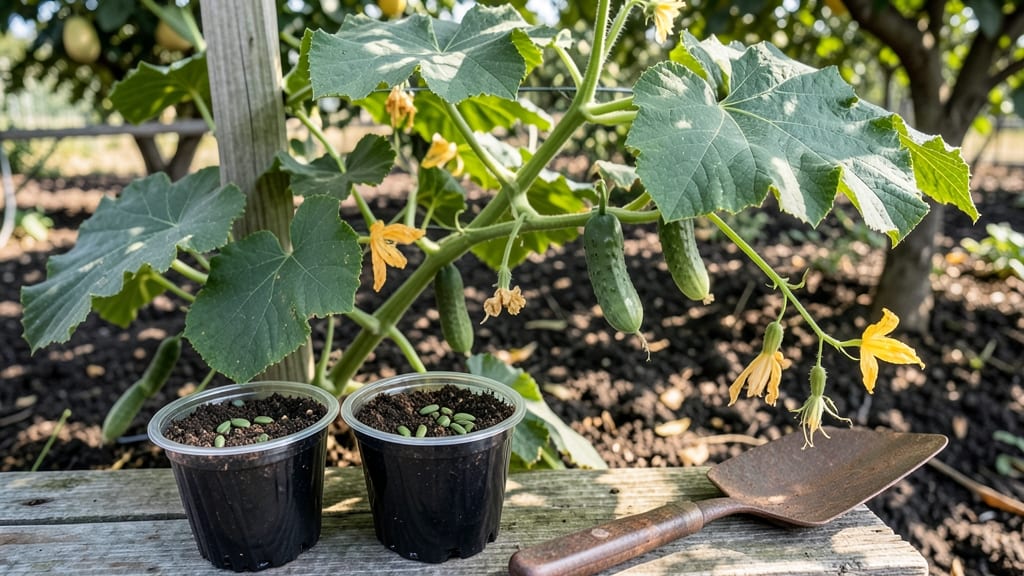
You can plant cucumber seeds from a cucumber by harvesting seeds from organic, heirloom varieties, cleaning them thoroughly, drying completely, and storing them in a cool place until spring planting. Avoid hybrid cucumbers, as their seeds won’t produce plants matching the parent fruit.
Saving cucumber seeds from your own harvest is a rewarding way to grow plants that thrive in your climate and taste exactly how you like.
The key lies in selecting the right cucumber variety—heirloom types like 'Straight Eight' or 'Lemon Cucumber' produce seeds that will grow true to type, while hybrids create unpredictable offspring. 🌱 After scooping out the seeds, ferment them in water for 3-5 days to separate viable seeds from pulp, then rinse and dry them completely before storing in a paper envelope in a cool, dark place.
What makes this process special is how it connects you directly to the growing cycle. When you plant seeds from your own cucumbers, you're essentially creating a genetic legacy tailored to your garden's conditions.
This method also saves money over time and reduces waste by putting every part of the cucumber to good use.
💡 In This Article
- How to Extract and Prepare Cucumber Seeds for Planting
- Best Cucumber Varieties for Seed Saving and Germination Tips
How to extract and prepare cucumber seeds for planting
To extract cucumber seeds, start by selecting a fully ripe, organic cucumber—look for one that's slightly soft when gently squeezed, with a deep green or yellow hue depending on the variety.
Cut the cucumber lengthwise and use a spoon to scoop out the jelly-like seed mass, which contains both viable seeds and pulp. The key here is to avoid any cucumbers treated with commercial pesticides, as these chemicals can inhibit germination.
Once you've extracted the seed mass, place it in a clean glass jar filled with water. The fermentation process is crucial—it helps separate the seeds from the pulp and removes any remaining fruit flesh. Let it sit at room temperature (70-75°F) for 3-5 days, stirring occasionally.
You'll notice bubbles forming and a slight foul odor (similar to sauerkraut), which indicates fermentation is working. This step also breaks down the seed coat slightly, improving germination rates. 💫
After fermentation, pour the mixture through a fine mesh strainer to separate the seeds from the liquid. Rinse the seeds thoroughly under cool water to remove any remaining pulp or fermentation byproducts.
Spread them on a paper towel or clean screen in a single layer, then place in a warm, dry spot (around 75-80°F) for 5-7 days to dry completely. Proper drying prevents mold and ensures long-term storage viability—seeds should feel crisp to the touch before storing.
For long-term storage, place the dried seeds in a paper envelope (not plastic, which traps moisture) and keep them in a cool, dark place like a refrigerator or seed vault. Label each envelope with the cucumber variety and harvest date, as seed viability typically lasts 2-4 years when stored properly.
To test viability before planting, perform a simple float test: place seeds in water—viable ones will sink while non-viable ones float.
What most gardeners don't realize is that the fermentation step isn't just about cleaning—it's also a natural way to test seed quality. Seeds that float during fermentation are often non-viable, while those that sink through the process are more likely to germinate successfully.
This method mimics how seeds would naturally disperse in a wild setting, where only the strongest survive. 🌱
If you're short on time, you can skip fermentation and manually clean the seeds by rinsing them under water, but this method is less effective at removing all pulp and may result in lower germination rates.
The trade-off is worth it for serious seed savers, as fermentation produces seeds that are 20-30% more likely to sprout compared to manually cleaned seeds.