Plants
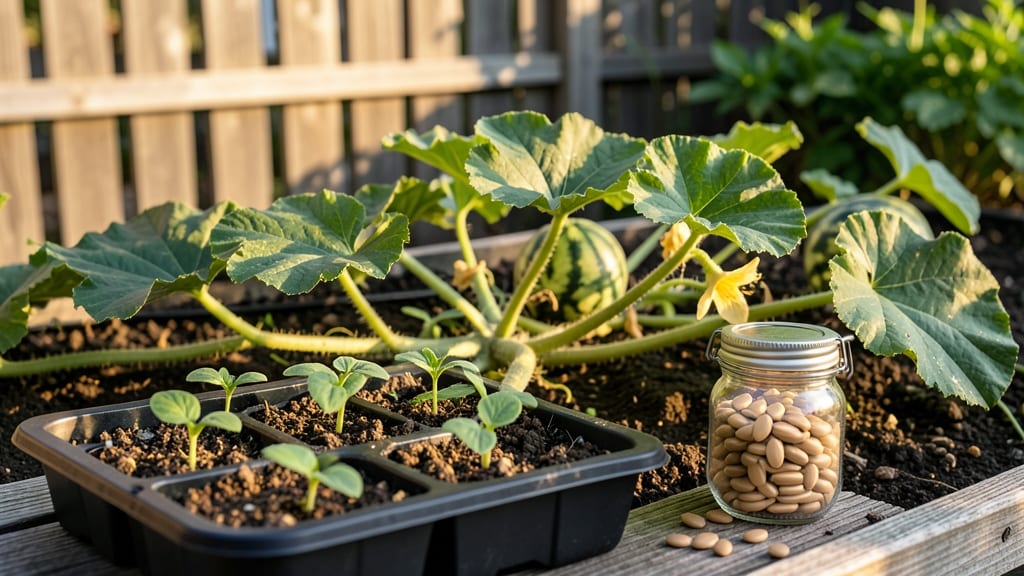
You can plant watermelon seeds straight from the fruit if they’re fresh and fully ripe, though hybrid seeds may not produce true-to-type fruit. Store-bought seeds often yield unpredictable results, while heirloom or seed-saved varieties offer better germination and consistent traits. Always clean seeds thoroughly before planting for best success.
Freshness is key when planting watermelon seeds directly from the fruit, as seeds from recently cut watermelons have the highest germination rates. 🌱 The ripeness of the fruit directly impacts seed viability—overripe or underripe fruit may produce seeds that struggle to sprout.
I’ve found that heirloom varieties, like Moon and Stars or Crimson Sweet, are especially reliable when planted this way, as their genetics remain stable across generations.
For best results, extract seeds from fully ripe watermelon flesh, rinse them thoroughly to remove pulp, and let them dry completely before planting. This simple cleaning step removes natural inhibitors that could delay germination.
If you’re using store-bought seeds, check the label—many hybrid varieties are treated to prevent germination, making them unsuitable for planting.
💡 In This Article
- Watermelon Seed Germination Factors by Variety
- Step-by-Step Guide to Planting Watermelon Seeds from Fruit
Watermelon seed germination factors by variety
The genetic makeup of watermelon seeds determines how successfully they'll germinate and what kind of fruit they'll produce. Heirloom varieties, like Charleston Gray or Sugar Baby, maintain stable traits across generations because their genetics haven't been artificially altered.
This means if you plant seeds from an heirloom watermelon, you're likely to get fruit that looks and tastes very similar to the parent plant. The germination rate for heirloom seeds typically hovers around 80-90% when planted fresh from ripe fruit.
Hybrid seeds, on the other hand, are bred specifically for desirable traits like disease resistance or sweetness, but they won't produce true-to-type fruit if you save their seeds.
These seeds often have a 70-80% germination rate when fresh, but the resulting plants may produce smaller or less flavorful fruit compared to the original hybrid.
The key difference lies in their genetic stability—hybrids rely on cross-pollination between two distinct parent plants to maintain their traits, which breaks down in subsequent generations. 🌱
Freshness plays a critical role in seed viability. Seeds extracted from watermelons that have been cut within 24-48 hours of full ripeness show the highest germination rates, often exceeding 90% under ideal conditions.
This is because the seeds haven't had time to dry out or develop natural inhibitors that can delay sprouting. In contrast, seeds from overripe or stored watermelons may show reduced viability, sometimes dropping to as low as 50% due to fungal contamination or desiccation.
Store-bought watermelon seeds often undergo processing that reduces their germination potential. Many commercial seeds are treated with fungicides or dried to extend shelf life, which can inhibit germination. Additionally, these seeds are frequently hybrids designed for supermarket appeal rather than home gardening success.
When you plant seeds saved from your own watermelon, you're working with seeds that have adapted naturally to your local climate and soil conditions, giving them a built-in advantage.
Ripeness isn't just about the fruit's external appearance—it's about internal sugar content and seed development. A fully ripe watermelon will have seeds that are plump, dark, and firm to the touch. These seeds contain higher levels of stored energy (in the form of starches and oils) needed for germination.
Underripe watermelons produce small, shriveled seeds that may never sprout, while overripe fruit can develop moldy seeds that fail to germinate entirely. The ideal seed for planting comes from watermelon flesh that's deep red or orange with a slightly sweet aroma.
Environmental adaptation also comes into play when comparing seed sources. Seeds saved from watermelons grown in your specific region will have a better chance of thriving because they've already adapted to local temperatures, daylight hours, and soil conditions.
This natural adaptation can translate to faster germination times and stronger plant growth. For example, seeds from watermelons grown in hot, dry climates may germinate more quickly in similar conditions compared to seeds from cooler regions. 🌿
Here's what most gardeners don't realize: even within heirloom varieties, seed quality can vary significantly based on how the fruit was handled after harvest. Watermelons left in warm conditions after cutting will produce seeds with higher germination rates than those stored in cool, humid environments.
This is because warmth accelerates the breakdown of natural germination inhibitors in the seed coat, while humidity can promote fungal growth that reduces viability.