
Propagation
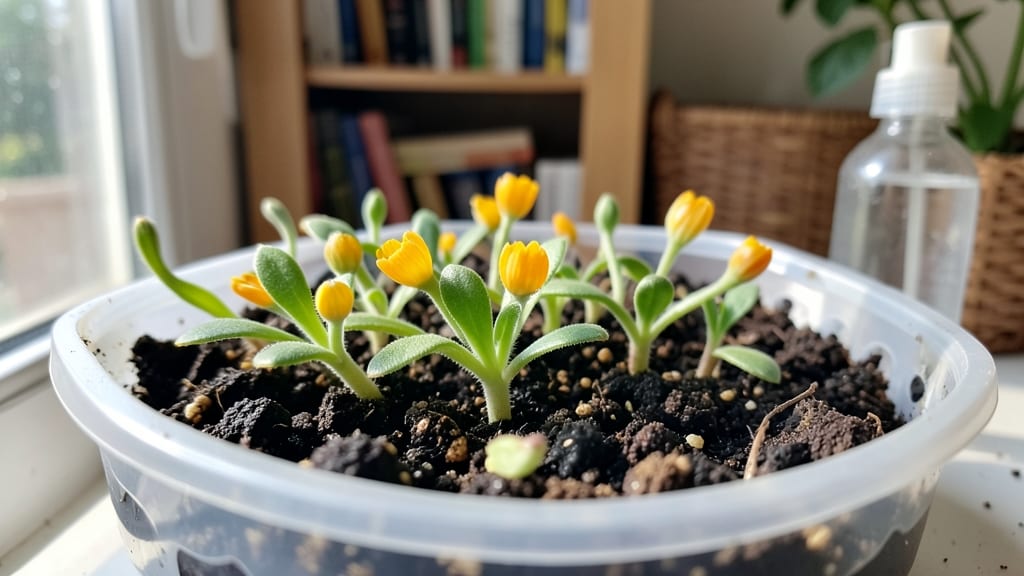
Germinating gazania seeds is the fastest way to get those bold, sunburst blooms in your garden—often in just 7 days if you nail the conditions. I’ve struggled with slow sprouting until I learned the secret: keep them warm, moist, and bright, just like their native African savanna.
The key isn’t complicated, but getting it wrong means waiting weeks or giving up entirely.
You’ll need a shallow tray, well-draining soil mix (50% potting soil, 50% perlite or sand), and a heat mat set to 75-80°F—gazanias refuse to sprout in cool soil. Plant seeds just ¼ inch deep, mist them daily, and cover with plastic wrap to trap humidity.
No fancy equipment required, just patience and a sunny windowsill or grow light.
Once those first bright green leaves appear, you’ll know you’re on track. True leaves (not the initial seed leaves) signal it’s time to transplant into individual pots. The seedlings grow fast—within 3 weeks, you’ll be hardening them off for the garden.
Just watch for leggy stems (too little light) or mold (too much moisture), and you’ll avoid the most common pitfalls.
These sun-lovers thrive in full light and dry soil once established, making them perfect for borders or containers. With the right start, you’ll have blooms all summer long—no waiting for nursery plants. Let’s get those seeds sprouting!
📚 In This Guide
- What you need
- Instructions
- Tips and common mistakes
- Wrapping up and next steps
What you need
- ● Gazania seeds: 1–2 packets (50–100 seeds per packet, non-GMO preferred for best results).
- ● Seed-starting trays: 1–2 shallow trays (3–4 inches deep) with drainage holes, or biodegradable peat pots.
- ● Seed-starting mix: 1–2 bags (1 quart each) of sterile, well-draining potting mix (avoid garden soil—it’s too dense!).
- ● Watering can or spray bottle: With a fine mist nozzle to avoid disturbing seeds.
- ● Plastic wrap or humidity dome: To retain moisture during germination (clear plastic wrap works in a pinch!).
- ● Grow lights or sunny windowsill: A full-spectrum LED grow light (12–16 hours/day) or a south-facing window (6+ hours of direct sunlight).
- ○ Heat mat (optional but helpful): A seedling mat set to 70–75°F (21–24°C) to speed up germination.
- ● Fertilizer: A diluted liquid seaweed or fish emulsion (1/4 strength) for post-germination feeding.
- ● Plant labels: To track varieties and planting dates.
- ● Tweezers: For delicate seed placement (especially for tiny seeds).
- ● Fan (gentle breeze): To prevent damping-off by improving air circulation.
- ● Transplanting pots (2–3 inch): For hardening off seedlings before outdoor planting.
Step-by-step instructions for germinating gazania seeds
Here’s how to coax vibrant gazania blooms from tiny seeds—fast and without fuss.
Prepare Containers and Seed Starting Mix
Fill small seed trays or individual pots with a sterile seed-starting mix—gazania seeds need loose, well-draining soil to prevent rot. I press the mix lightly into the containers to remove air pockets, then moisten it with a fine mist until damp but not soggy. The soil should hold its shape when gently squeezed but not clump together. This ensures seeds won’t suffocate or drown during germination.
Place the trays in a shallow tray lined with pebbles to catch excess water. Gazania seeds are tiny, so I use a toothpick to create shallow furrows—just 1/8 inch deep—before spacing them 1/4 inch apart. This prevents overcrowding later. A label with the date helps track progress, since gazania germination is speedy but inconsistent.
Sow Seeds and Create Ideal Germination Conditions
Sprinkle the seeds along the furrows, pressing them lightly into the soil with your fingertip—just enough to ensure contact but not deep enough to delay sprouting. Cover them with a thin layer of fine vermiculite (about 1/16 inch deep) to shield them from drying out. Mist the surface again with water until the soil is evenly damp, but avoid soaking it.
Place the trays in a warm, bright location—gazania seeds germinate best at 70–75°F. A seedling heat mat set to 75°F speeds up the process, but a sunny windowsill or under grow lights works too. Keep the soil consistently moist by covering the trays with clear plastic wrap or a humidity dome. Check daily for condensation—if droplets form, lift the cover for 10 minutes to prevent mold.
Monitor for Sprouts and Adjust Light Immediately
Germination typically occurs in 5–7 days, but some seeds may take up to 14 days. Look for tiny green cotyledons pushing through the soil—this is your signal to remove the plastic cover right away. Gazania seedlings are delicate and prone to damping-off if kept too damp. Once sprouted, move the trays to a south-facing window or under grow lights for 14–16 hours of light daily. Without enough light, seedlings stretch weakly and develop leggy stems.
If seedlings appear crowded, thin them to 2 inches apart using scissors to avoid disturbing roots. Keep the soil lightly moist—gazania hates soggy conditions. After the first true leaves (the second set, not the initial cotyledons) appear, reduce watering slightly to encourage stronger root development. This is also the time to introduce a balanced liquid fertilizer at half-strength to support early growth.
Harden Off and Prepare for Transplanting
Once seedlings are 2–3 inches tall with 4–5 true leaves, begin hardening them off. Place the trays outside in a sheltered, shaded spot for 1–2 hours the first day, gradually increasing exposure over 7–10 days. Gazania thrives in full sun, so by the end of this period, they should tolerate 6+ hours of direct light daily. Avoid transplanting on windy days—their delicate stems can break easily.
Choose a warm, sunny outdoor spot with well-draining soil. Dig holes slightly larger than the root balls and space plants 6–12 inches apart, depending on the gazania variety. Water deeply after planting to settle the soil and encourage root establishment. Mulch lightly with 1 inch of organic mulch to retain moisture and suppress weeds, but keep it 2 inches away from stems to prevent rot.
Tips & tricks for perfect germinating gazania seeds
These essential insights will help you bypass the most common pitfalls when growing gazania from seeds, ensuring vibrant blooms in just seven days.
Soil Preparation: The sterile seed-starting mix must be loose enough to allow roots to penetrate easily. If your mix feels dense, add perlite or coarse sand (about 20% of the mix volume) to improve drainage. Gazania seeds are particularly sensitive to compacted soil, which can lead to rot. Press the soil lightly into your containers to eliminate air pockets, but avoid compressing it—this creates the perfect balance for seed contact without suffocating them. A simple test: squeeze the soil gently; it should hold its shape but not crumble like sand.
Temperature Matters: Maintaining a consistent 75°F environment is critical for germination, but achieving this can be tricky. If you don’t have a heat mat, place your seed trays on top of a refrigerator or in a warm closet near a light source. I’ve found that setting a small fan on low to circulate air around the trays helps maintain even warmth. The key is consistency—fluctuations below 70°F can delay germination by several days, while temperatures above 80°F may cause the seeds to rot before sprouting.
Light Management: Once those first green cotyledons appear, you’ll need to transition to 14–16 hours of light daily. If using grow lights, position them just 2–3 inches above the seedlings—they’ll stretch toward the light if they’re too far away. For window placement, a south-facing window provides the most consistent light, but east or west windows work if supplemented with a small LED grow light for 2–3 hours in the morning or evening. Leggy seedlings are a clear sign of insufficient light, and they’ll never recover their compact growth habit once they’ve stretched.
Harden Off Gradually: The 7–10 day hardening process is where many gardeners rush and end up with damaged seedlings. Start with just 1–2 hours of shade on day one, then increase exposure by 30–60 minutes each subsequent day. I’ve seen gazania seedlings snap in half when moved directly to full sun too soon—those delicate stems can’t handle the stress. By day seven, they should be ready for 6+ hours of direct sunlight, but always monitor for wilting as a sign they need more time to acclimate.
Pro Tips for Germinating Gazania Seeds
- These essential insights will help you bypass the most common pitfalls when growing gazania from seeds, ensuring vibrant blooms in just seven days.
- Soil Preparation: The sterile seed-starting mix must be loose enough to allow roots to penetrate easily.
- Temperature Matters: Maintaining a consistent 75°F environment is critical for germination, but achieving this can be tricky.
Frequently asked questions
Got questions about germinating gazania seeds?
You’re not alone! Here are answers to the most common concerns—so you can grow vibrant blooms with confidence.
How long does it take for gazania seeds to germinate?
Gazania seeds typically sprout in 7–14 days under ideal conditions (warm soil, 70–75°F, and consistent moisture). Patience is key—some varieties may take up to 3 weeks! Keep the soil lightly damp (not soggy) and avoid moving the tray until sprouts appear.
Can I germinate gazania seeds indoors before transplanting?
Yes! Start seeds indoors 4–6 weeks before your last frost date. Use a seed-starting mix, cover with a thin layer of soil, and place under grow lights (12–16 hours/day). Harden off seedlings for 7–10 days before moving them outdoors to prevent shock.
Why aren’t my gazania seeds sprouting? Troubleshooting tips.
Check these common issues:
- Too cold: Gazanias need warmth! Use a heat mat (75°F+) or place near a sunny window.
- Overwatering: Damp soil suffocates seeds. Water lightly and ensure good drainage.
- Old seeds: Store-bought seeds lose viability after 1–2 years. Test freshness by soaking a few in water—if they float, they’re likely dead.
- Low light: Seeds need indirect sunlight (or grow lights) to germinate.
Can I direct-sow gazania seeds outdoors?
Wait until after the last frost and soil temps reach 60°F+. Scatter seeds thinly (they’re tiny!), cover lightly with soil, and water gently. Thin seedlings to 6–12 inches apart once they’re 2–3 inches tall for optimal growth.
What’s the best way to speed up germination?
Try these pro tips:
- Warmth: Place seeds on a heat mat or near a sunny window.
- Light: Use a grow light (12+ hours/day) to mimic spring conditions.
- Misting: Keep soil moist (not wet) with a spray bottle.
- Pre-soak: Soak seeds in warm water for 24 hours before planting (optional).
Wrapping up and next steps
Germinating gazania seeds is a rewarding journey that brings vibrant, sun-loving blooms to your garden in just 7 days! With the right mix of warmth, moisture, and patience, you’ll unlock a burst of color that thrives in heat and drought. 🌞
Ready to dive in? Start by gathering your supplies—soil, containers, and those tiny seeds—and follow the simple steps above. Once your seedlings sprout, transplant them carefully into well-draining soil and watch your garden transform! Happy growing! 🌱