Planting
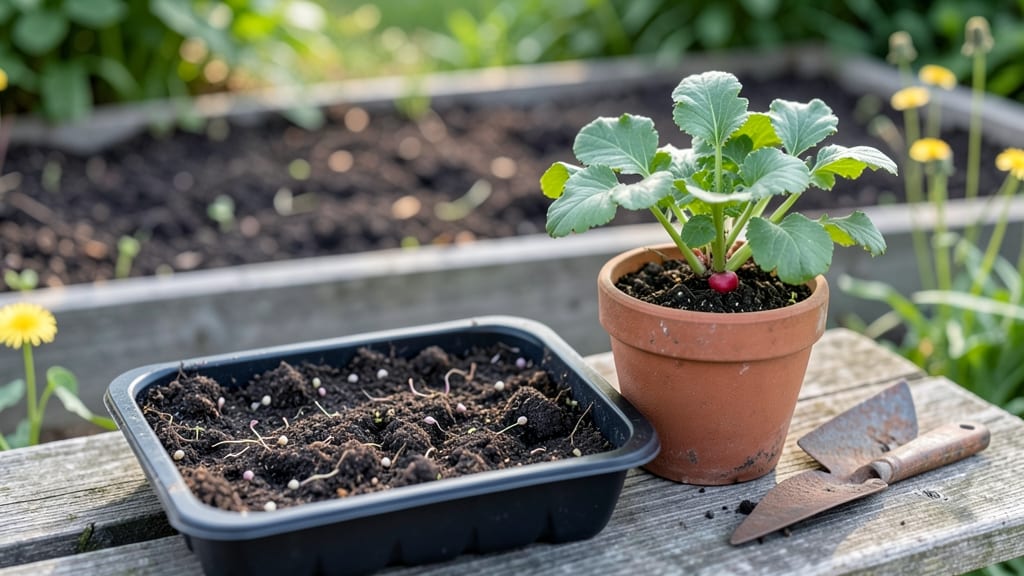
Planting radish seeds in cool soil means crispy, fast harvests in as little as 25 days—no waiting months like with other veggies.
I learned the hard way that skipping soil prep or planting too deep turns radishes woody and bitter, but once you nail the basics, you'll be pulling bright red roots straight from your garden. The secret isn't complicated: it's about timing, moisture, and a little patience.
You'll need well-draining soil (sandy loam works best), a sunny spot with at least 6 hours of direct light daily, and seeds spaced just 1 inch apart in rows 12 inches apart. Radishes thrive in cool weather—spring or fall—when temperatures stay between 50-75°F.
Overheating soil turns them pithy, so avoid planting when summer hits. The right variety matters too: quick-growing types like 'Cherry Belle' or 'French Breakfast' deliver crisp results in under a month.
Once planted, keep soil consistently moist but never soggy—radishes hate drying out. A light mulch helps retain moisture while keeping roots cool. Within 3-5 days, you'll see tiny sprouts pushing through the soil, and by week 4, you'll be harvesting bright, crisp radishes straight from the ground.
The first harvest is the sweetest—imagine pulling a perfect, peppery root right when you need it for a salad or snack.
Here's where most beginners trip up: planting too late in the season or crowding seeds. Radishes bolt (go to seed) fast when stressed, so stay on schedule and thin seedlings to 1 inch apart as they grow.
With the right care, you'll get multiple harvests from a single planting, and the crispy texture you crave. Ready to grow your fastest veggie yet?
📚 In This Guide
- What you need
- Instructions
- Tips and common mistakes
- Wrapping up and next steps
What you need
- ● Radish seeds: Choose fast-maturing varieties like Cherry Belle or French Breakfast (1–2 oz per 10 sq ft). Opt for organic or heirloom seeds if preferred.
- ● Garden soil: Well-draining, loose soil with a pH of 5.8–6.8. Mix in 1–2 inches of compost for nutrient-rich soil.
- ● Watering can or hose: With a gentle spray nozzle to avoid disturbing seeds.
- ○ Gloves (optional but recommended): To protect your hands from soil and sharp seed packets.
- ● Row marker or sticks: For marking planting rows (especially useful in larger gardens).
- ● Seedling trays or biodegradable pots: For starting seeds indoors 4–6 weeks before the last frost (if your climate demands it).
- ● Row cover or frost cloth: To protect young seedlings from unexpected chills.
- ● Organic fertilizer: Low-nitrogen, high-phosphorus fertilizer (e.g., 5-10-10) to boost root growth.
- ● Mulch: Straw or shredded leaves to retain moisture and suppress weeds.
- ● Plant labels: To track varieties and planting dates (trust us, it’s a lifesaver!).
- ● Knee pad or small stool: For comfortable planting in larger garden beds.
Step-by-Step instructions for planting radish seeds
Here's how to get those fast, crispy radishes growing strong from the very first planting.
Prepare the Soil for Fast Germination
Radishes thrive in cool, well-drained soil with a pH between 5.8 and 6.8. Work the 2 gallons of garden soil you've set aside to a depth of 6-8 inches, breaking up any clumps. Mix in the 1 cup of compost thoroughly—this gives radishes the nutrients they need to grow quickly without becoming woody. The soil should feel crumbly when you squeeze it, like a damp sponge.
If your soil feels heavy or clay-like, add ½ cup of coarse sand to improve drainage. Radishes rot easily when their roots stay waterlogged. Test the moisture by grabbing a handful—it should hold together when pressed but not leave water dripping. This ensures your seeds won't suffocate or wash away during planting.
Plant Seeds at the Right Depth and Spacing
Radish seeds are tiny but pack a punch, so handle them carefully. Use your fingers to create small furrows ½ inch deep and 1 inch apart in the prepared soil. Drop 3-4 seeds per furrow, spacing them 1 inch apart—this gives you backup plants in case some don't germinate. Cover them lightly with soil, patting gently to ensure good seed-to-soil contact.
Here's the thing—radishes germinate fastest in 55-65°F soil. If your ground feels warmer, wait a few days or plant in the shade until temperatures drop. Water the soil gently with a spray bottle or fine rose attachment until the surface looks evenly moist but not soggy. Avoid heavy watering now, or you'll wash seeds deeper than ideal.
Provide Consistent Moisture for Speedy Sprouts
Keep the soil consistently moist until germination, which typically happens in 3-7 days—sometimes even faster. Check daily by sticking your finger ½ inch deep; if it feels dry, water lightly again. A soaker hose or drip irrigation works best to avoid disturbing the seeds. You'll see tiny green shoots emerge first, followed by the true leaves within a few days.
Once seedlings reach 1 inch tall, thin them to 1 plant every 2 inches using scissors to avoid disturbing roots. Pulling seedlings can uproot nearby plants. The thinned seedlings make great additions to salads—just snip and toss them in. This step ensures your radishes have enough space to grow plump and crisp, not crowded and stunted.
Maintain Even Water and Sun for Crispy Harvests
Radishes need 1-1½ inches of water per week, split between 2-3 waterings. Let the top ½ inch of soil dry between waterings to prevent rot, but never let the soil dry out completely. Inconsistent moisture leads to pithy, bland radishes—you want that signature crisp snap. Water deeply in the morning so foliage dries quickly, reducing disease risk.
Place your radish patch in full sun (6+ hours daily) for the fastest, sweetest harvests. If your climate runs hot, provide afternoon shade during peak summer months to prevent bolting (when plants flower prematurely). You'll know they're ready to harvest when tops reach 1-1½ inches wide—this usually takes 3-4 weeks for quick varieties like Cherry Belle.
Harvest at Peak Crispness for Best Flavor
Pull radishes when they reach ½-1 inch in diameter for the crispiest texture. Use a garden fork to loosen soil around the roots, then grasp the greens and tug gently—this prevents damage to the radish itself. Harvest in the morning after watering, when flavors are most concentrated. Overgrown radishes become woody and lose their sweetness, so check weekly once they start appearing.
After harvest, water the bed again and let it rest for 1-2 weeks before replanting. Radishes are fast growers, so you can often squeeze in 2-3 successive plantings per season. Store harvested radishes in the fridge for up to 2 weeks—they'll stay crisp and fresh, ready for salads, roasting, or snacking straight from the garden.
Tips & tricks for planting radish seeds
A few quick tricks will help you achieve those fast, crispy radishes you're dreaming of. These are the secrets that make all the difference between a disappointing harvest and a garden full of plump, sweet radishes.
Soil Temperature is Everything: The 55-65°F soil temperature range mentioned in Step 2 is critical for fast germination. I've learned the hard way that planting too early in cool climates or too late in warm ones can delay sprouting by weeks. If your soil feels warmer than 65°F, consider using shade cloth or planting in a cooler part of your garden. You can also try planting in containers that you can move to shadier spots during the hottest parts of the day.
Seed Spacing Strategy: In Step 2, planting 3-4 seeds per furrow with 1-inch spacing gives you built-in insurance. Here's what I do differently: I mark my furrows with a stick before planting so I can maintain that perfect 1-inch spacing between seeds. This prevents overcrowding later and makes thinning much easier. I also find that using a small spoon helps me place seeds more precisely than just dropping them by hand.
Watering Wisdom: The consistent moisture mentioned in Step 3 is key to preventing those pithy, bland radishes we all dread. I've found that using a spray bottle with a fine mist setting gives me the most control over watering without disturbing seeds. Another trick is to water in the early morning—this gives the soil time to dry slightly during the day, reducing the risk of fungal diseases that thrive in damp conditions.
Thinning Technique: When your seedlings reach 1 inch tall in Step 3, thinning to 1 plant every 2 inches might seem harsh, but it's worth it. I use clean kitchen scissors to snip seedlings at soil level rather than pulling them. This prevents disturbing the roots of the plants you're keeping. The thinned seedlings make great additions to salads—just rinse and chop them up. This method also gives you the space needed for those crisp, plump radishes you're growing for.
Pro Tips for Plant Radish Seeds
- A few quick tricks will help you achieve those fast, crispy radishes you're dreaming of. These are the secrets that m...
- Soil Temperature is Everything: The 55-65°F soil temperature range mentioned in Step 2 is critical for fast germinati...
- Seed Spacing Strategy: In Step 2, planting 3-4 seeds per furrow with 1-inch spacing gives you built-in insurance. Her...
Frequently asked questions
How deep should I plant radish seeds?
Plant radish seeds about ½ inch (1.25 cm) deep in well-drained soil. Since they’re tiny, avoid burying them too deeply—they need light to germinate quickly! For larger varieties, you can push them slightly deeper (up to ¾ inch).
How long does it take for radish seeds to germinate?
Radishes are fast growers—expect sprouts in 3–7 days in warm soil (60–70°F). If soil is cooler (below 50°F), germination may take 10–14 days. Keep soil consistently moist but not soggy to speed things up!
Can I plant radish seeds in hot weather?
Radishes thrive in cool weather (50–70°F). If temps rise above 75°F, they’ll bolt (go to seed) quickly, making them pithy. For summer planting, opt for heat-tolerant varieties like ‘Cherry Belle’ or grow them in partial shade.
What can I plant with radishes to improve growth?
Radishes are great companion plants! Pair them with:
- Carrots (they deter pests)
- Lettuce (shares space well)
- Spinach (both love cool soil)
Why aren’t my radish seeds sprouting?
Check these common issues:
- Too deep? Dig up a seed—if it’s buried >1 inch, replant shallowly.
- Cold soil? Use a seedling heat mat or wait for warmer temps.
- Dry soil? Keep seeds moist (not waterlogged) until sprouts appear.
- Old seeds? Radishes lose viability after 1–2 years—test a few!
Wrapping up and next steps
Growing radishes from seed is a rewarding and surprisingly simple process—perfect for beginners or seasoned gardeners craving quick, crispy rewards! 🌱 With their fast germination (often within days) and love for cool weather, radishes are a fantastic way to jumpstart your garden or fill gaps in your harvest.
Whether you’re aiming for vibrant reds, spicy daikons, or sweet French breakfast varieties, the key is patience, consistent moisture, and a little shade during peak heat.
Ready to dig in? Start by marking your calendar for a second planting in 2–3 weeks—this ensures a steady supply of fresh radishes all season long. Grab your gloves, grab some seeds, and enjoy the satisfaction of harvesting your own homegrown crunch in just a few weeks! 🚀