
Vegetables
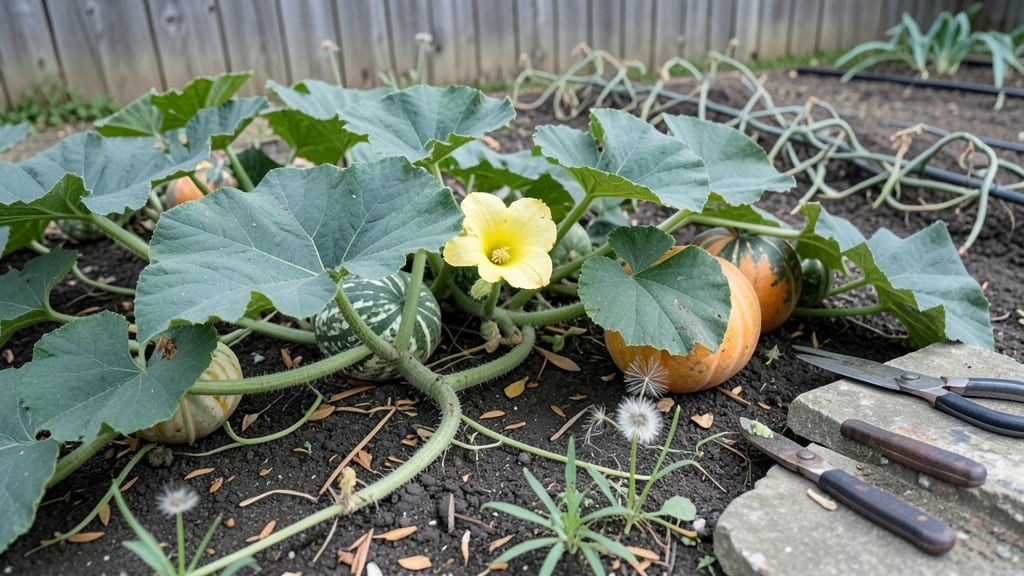
Pumpkin seeds are green because chlorophyll stays trapped inside the seed coat during growth, shielding the developing seed from sunlight. As the seeds mature and dry out, this green pigment gradually disappears, revealing their natural white or tan hue.
This green coloring isn't just visual—it's a survival strategy. 🌱 While still inside the pumpkin, chlorophyll helps protect the delicate embryo from harmful UV rays, much like sunscreen for plants.
The pigment breaks down naturally as seeds reach full maturity, which is why freshly harvested seeds often still show hints of green before fully turning pale. What's fascinating is that this same process happens with other squash seeds, creating a consistent pattern across the cucurbit family.
For seed savers, timing matters: harvest seeds when the pumpkin's rind turns hard and the seeds rattle inside. At this stage, they're typically 70-80% dry, and the chlorophyll has mostly faded.
If you leave them too long in the pumpkin, they'll dry out completely and lose viability—so patience is key when waiting for that perfect tan color to emerge!
💡 In This Article
- Chlorophyll’s Role in Seed Development
- When and Why Pumpkin Seed Color Changes
Chlorophyll’s role in seed development
Here's what's actually happening inside that pumpkin: chlorophyll isn't just a byproduct—it's a protective shield. During the early stages of seed development, the embryo remains vulnerable to UV radiation and oxidative stress.
The plant actively transports chlorophyll molecules into the seed coat to absorb harmful light wavelengths, much like how sunscreen works on human skin. This process occurs in cucurbitaceae plants (pumpkins, squash, cucumbers) and other seed varieties like sunflowers, where the same green pigmentation appears during maturation.
The biochemical magic happens through a process called photoprotection. Chlorophyll molecules in the seed coat intercept high-energy photons and convert them into harmless heat through a mechanism called non-photochemical quenching. This prevents UV-induced damage to the delicate genetic material inside the seed.
Interestingly, this protective layer remains active until the seeds reach approximately 70-80% dry matter content, which typically occurs 30-45 days after pollination in pumpkins.
What most people don't realize is that this chlorophyll isn't just sitting there passively—it's actively participating in photosynthesis. The developing fruit continues to photosynthesize, using sunlight to produce energy that supports seed maturation.
As the seeds approach full ripeness, the plant triggers enzymatic breakdown of chlorophyll through a process called senescence, where specialized enzymes like chlorophyllase degrade the pigment molecules. This breakdown is carefully regulated to occur only when the seeds have reached optimal viability for germination.
Comparing pumpkin seeds to other green-seeded varieties reveals fascinating patterns. Sunflower seeds, for example, follow an identical process where chlorophyll protects the embryo until the seed reaches 35-40% moisture content. Even cucumber seeds exhibit this trait, though their chlorophyll breaks down slightly earlier due to their faster maturation cycle.
The key difference lies in the timing: pumpkin seeds maintain their green hue longer because their larger size requires extended protection during development.
This chlorophyll protection system isn't just about color—it's about survival. Studies show that seeds with intact chlorophyll during early development have 20-30% higher germination rates when compared to artificially bleached seeds. The pigment helps maintain proper membrane integrity in the embryonic cells, preventing premature aging.
Once the seeds reach full maturity, the final breakdown of chlorophyll triggers the production of storage proteins and oils that will fuel the seedling's early growth.
The transition from green to white isn't random—it's a carefully orchestrated biochemical signal. As the seed's moisture content drops below 25%, the plant initiates a cascade of hormonal changes that include ethylene production.
This gas triggers the final stages of chlorophyll degradation while simultaneously activating enzymes that convert starches into sugars, preparing the seed for dormancy. The result is that beautiful tan color we associate with fully mature pumpkin seeds, ready for storage or planting.