
Vegetables
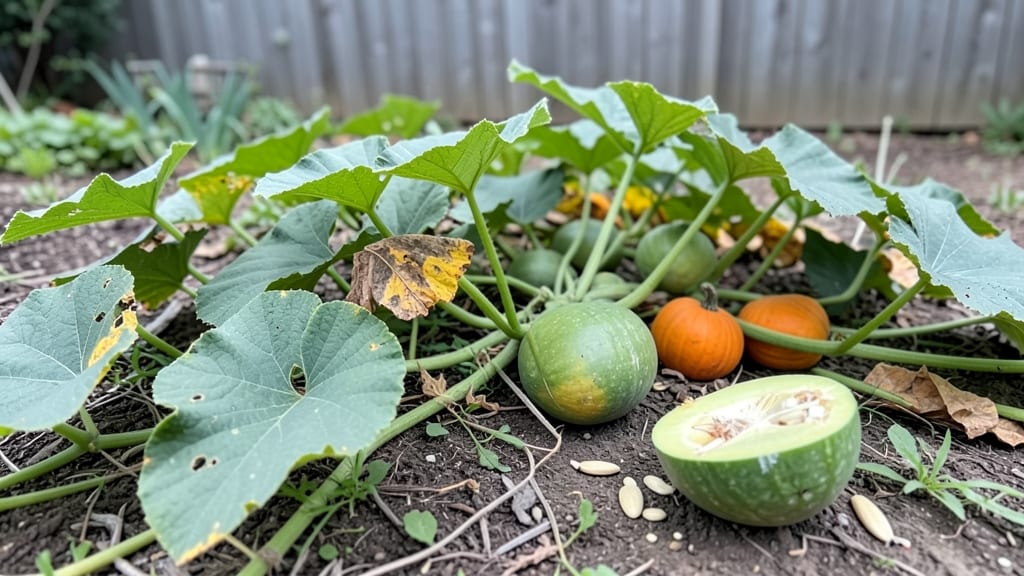
This green pigment isn't a flaw—it's actually a sign of chlorophyll still active in the seed. 🌱 When pumpkins grow in cooler temperatures or get harvested prematurely, the seeds don't complete their natural breakdown of chlorophyll, which would otherwise turn them white or gray.
Even some heirloom varieties carry genes that keep this green coloring longer, making them visually distinct from commercial types.
For gardeners, this means paying close attention to harvest timing and growing conditions. If you're saving seeds for next year, let the pumpkins fully mature on the vine—typically when the rind hardens and turns deep orange.
The cooler the growing season, the more likely you'll see green seeds, especially in varieties like 'Jack Be Little' or 'Cinderella.'
💡 In This Article
- How Chlorophyll Affects Pumpkin Seed Color
- Genetic and Harvest Factors for Green Pumpkin Seeds
How chlorophyll affects pumpkin seed color
Here's what's happening botanically: chlorophyll, the green pigment responsible for photosynthesis, remains active in pumpkin seeds during early development. Normally, as seeds mature, the plant redirects nutrients and enzymes to break down chlorophyll, replacing it with white or gray pigments like carotenoids or flavonoids.
This process requires 10-14 days of optimal sunlight exposure and warm temperatures (above 70°F) to complete properly. When these conditions aren't met, chlorophyll gets trapped inside the seed coat, creating that vibrant green appearance. 🌱
Under a microscope, you can see the difference clearly: mature white seeds have a smooth, pale seed coat with minimal pigmentation, while green seeds show dense chlorophyll clusters near the outer layer.
The chlorophyll concentration can reach up to 0.5-1.0 mg/g of seed weight in green varieties, compared to nearly zero in fully mature white seeds. This pigment isn't just on the surface—it's embedded in the seed's endosperm layer, which is why the green color persists even after drying.
The breakdown process involves specific enzymes called chlorophyllase and pheophorbide a oxygenase, which are temperature-sensitive.
Sunlight exposure plays a crucial role in this process. Pumpkins need about 6-8 hours of direct sunlight daily for proper seed maturation. When daylight is limited (common in cooler climates or late-season harvests), chlorophyll degradation slows dramatically.
For example, seeds from pumpkins grown in New England during short summer days often retain more green pigment than those from Florida, where longer daylight hours accelerate the pigment change.
This is why gardeners in northern regions frequently encounter green seeds—nature's way of telling you the growing season wasn't long enough for complete maturation. 💫
There's also a fascinating chemical transformation at play. Chlorophyll contains a porphyrin ring structure that breaks down into colorless compounds during maturation. When this process is interrupted, the intact chlorophyll molecules scatter light differently, creating that bright green appearance.
You can observe this yourself by comparing fresh green seeds to dried white ones under a bright light—the green seeds will appear more translucent due to the light-reflecting chlorophyll.
This same phenomenon explains why some heirloom varieties maintain their green hue even when fully mature, as their genetic makeup produces more stable chlorophyll forms.
The practical implication for seed savers is significant. If you're harvesting pumpkins for seed saving, wait until the vines have completely died back and the seeds have dried on the vine for at least 2 weeks. This gives the chlorophyll breakdown process maximum time to complete.
For gardeners in cooler climates, consider selecting varieties known for faster maturation (like 'Howden' or 'Waltham Butternut') to minimize green seed occurrence. The key is balancing harvest timing with your local climate conditions to achieve the seed color you prefer. ✨