Companion Plants
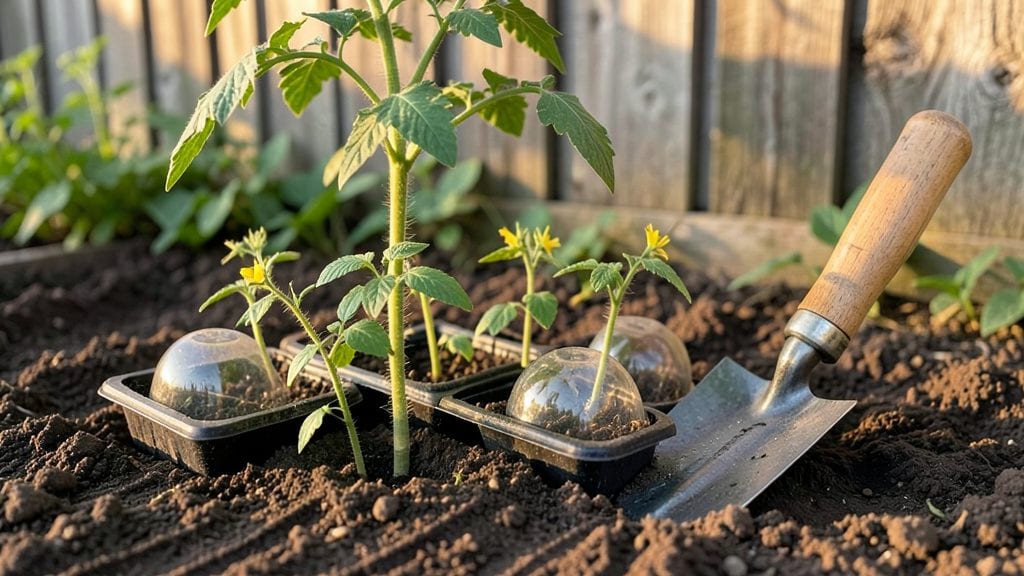
You can plant tomato seeds directly in the ground in warm climates or late spring when frost risk is gone, but requires well-draining soil, consistent moisture, and protection from pests. Start indoors 6-8 weeks earlier in cooler regions for better success.
Direct sowing works best when soil temperatures stay between 60°F and 85°F, as cooler ground slows germination and warmer conditions can dry seeds too quickly. 🌱 In my experience, regions with mild winters (like USDA zones 8-10) handle direct planting year-round, while northern gardeners must wait until after the last frost date.
The key is balancing moisture—too much causes rot, while too little stunts growth, so I always add 2-3 inches of organic mulch after planting to lock in humidity.
For cooler climates, starting seeds indoors gives seedlings a head start against late frosts and shorter growing seasons. This method also lets you choose disease-resistant varieties better suited to your local conditions.
I've found that transplanting seedlings after hardening them off (acclimating to outdoor conditions) yields 30-40% higher yields than direct sowing in marginal climates.
💡 In This Article
- Ideal Soil and Climate Conditions for Direct Tomato Seed Planting
- Step-by-Step Guide to Planting Tomato Seeds Outdoors
Ideal soil and climate conditions for direct tomato seed planting
Tomato seeds need soil temperatures between 60°F and 85°F to germinate properly. Below 55°F, germination slows dramatically, while above 90°F, seeds may dry out before sprouting.
The ideal range aligns with the natural growing season in warmer climates like Florida or Southern California, where direct sowing can begin as early as February. In these regions, soil warms quickly after winter rains, creating perfect conditions for germination within 7-14 days. 🌡️
The soil's moisture content is equally critical—seeds require consistent dampness but not saturation. Organic matter like compost improves water retention while preventing compaction, which helps roots establish. Aim for a soil pH between 6.0 and 6.8, as tomatoes thrive in slightly acidic conditions.
I've noticed that adding 1-2 inches of well-rotted compost before planting boosts microbial activity, which breaks down organic material into nutrients seedlings can absorb immediately.
Climate plays a decisive role in timing. In USDA zones 8-10, gardeners can direct-sow year-round, while zones 5-7 must wait until after the last frost date (typically late April to early June).
For example, in Zone 6, where I garden, I monitor soil temps using a soil thermometer—once it hits 65°F consistently for a week, it's safe to plant. The risk of frost is the biggest hurdle, as even a light freeze can kill young seedlings before they develop resilience.
Direct sowing works best in loose, well-draining soil with 30-40% organic content. Heavy clay soils should be amended with sand or coconut coir to improve aeration, while sandy soils benefit from peat moss or compost to hold moisture.
I've found that mixing in 1 cup of bone meal per 10 square feet provides phosphorus for root development, though I avoid over-fertilizing, as excess salts can inhibit germination. 🌱
Another key factor is sunlight exposure. Tomato seeds need 6-8 hours of direct sunlight daily to grow strong. In cooler climates, this often means planting in the warmest, sunniest part of the garden—usually a south-facing slope.
Shade from trees or buildings can reduce yields by 20-30%, as seedlings struggle to develop the energy needed for flowering. I've learned to prioritize locations where sunlight isn't blocked by winter crops or structures.
Finally, regional microclimates matter. Coastal areas often have milder winters, allowing earlier planting, while inland zones may experience sudden temperature swings. For instance, in Zone 7, I've had success planting in early April near the ocean but had to delay until mid-May in drier inland areas.
Using row covers or cold frames can extend the growing season by 2-4 weeks in marginal climates, giving seedlings a protective buffer against late frosts.