
Lawn
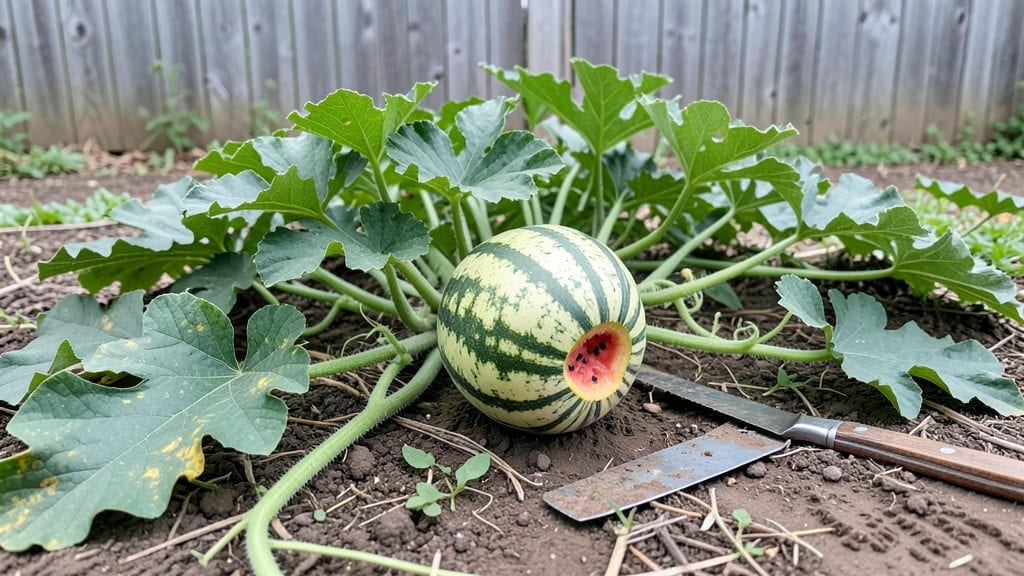
A single watermelon seed can produce anywhere from one to five fruits depending on the variety, but most gardeners see 2-3 🍉 when given ideal conditions.
Wondering how many watermelons you’ll harvest from a single seed? The answer isn’t as straightforward as you might think—it depends on the variety, growing conditions, and your pruning strategy.
A sprawling vine like 'Sugar Baby' might yield 3-5 melons, while compact bush types like 'Black Diamond' rarely exceed 1-2.
Spacing plays a huge role too. Crowd your plants, and you’ll get more vines but smaller fruit. Give them room—3-6 feet apart for vining types, 2-3 feet for bush varieties—and watch those melons grow bigger, not just more numerous.
Below, I’ll break down the best spacing tips, how to train vines for maximum yield, and the one pruning trick that turns a handful of seeds into a summer’s worth of harvests.

How many watermelons typically grow from one seed: variety-specific expectations
When you plant a single watermelon seed, the number of fruits you’ll harvest depends entirely on the variety and its genetic growth habit. Some varieties produce just 1-2 fruits per vine, while others can yield 5+ watermelons from a single seedling.
The key difference lies in whether the plant is a bush type or a sprawling vine—and understanding this will help you plan your garden layout for maximum yield.
Watermelons are monoecious plants, meaning each vine produces separate male and female flowers.
A single female flower typically develops into one fruit, but the number of female flowers per vine varies dramatically between varieties. Vining varieties like 'Sugar Baby' or 'Crimson Sweet' can produce 3-5 female flowers, while bush varieties such as ' Bush Champion' or 'Tiny Tim' often produce just 1-2 female flowers per vine.
Here’s the critical factor: fruit load capacity. A sprawling vine has the energy to support multiple fruits, but each additional watermelon competes for nutrients, water, and sunlight. If you overburden the vine, you’ll end up with smaller, underdeveloped fruits instead of a few large, juicy melons.
This is why pruning and spacing play such a crucial role in optimizing yield per seed.
Another consideration is the watermelon variety’s intended use. Seedless varieties, like 'Seedless Black Diamond,' often produce more female flowers because they invest energy into fruit development rather than seed production.
In contrast, heirloom varieties with large seeds may focus energy on fewer, larger fruits. Always check the variety description for clues about its expected fruit count per vine.
🌱
If you’re growing bush varieties, expect to harvest 1-2 watermelons per seed. These compact plants are ideal for small spaces or containers, but their limited energy means fewer fruits.
For example, 'Tiny Tim' produces just one small watermelon per vine, while 'Bush Champion' might yield two slightly larger ones. The trade-off? These varieties often ripen faster and are less prone to disease due to their denser foliage.
On the other hand, sprawling vining varieties can produce 5 or more watermelons per seed if given enough space and resources. Varieties like 'Jubilee' or 'Moon and Star' are powerhouses, but they require ample sunlight, water, and nutrients to support their high fruit load.
Without proper care, these vines may produce many small, underripe fruits instead of a few large, sweet melons.
One common misconception is that more seeds = more watermelons. In reality, planting extra seeds doesn’t increase the number of fruits per vine—it just gives you more vines competing for the same resources.
For optimal yield, focus on spacing and pruning rather than overcrowding. A single well-cared-for vine will always outproduce a crowded patch of struggling plants.
For container gardening, choose bush or semi-dwarf varieties to avoid overcrowding. A 5-gallon pot can comfortably support one 'Sugar Baby' vine, which will produce 2-3 watermelons if pruned correctly.
In contrast, a standard vining variety in a container would struggle to produce more than one fruit due to limited root space.
🌿
Space-saving pruning techniques to control watermelon growth
If you're growing watermelons in a small garden, you might assume one seed equals one fruit—but that’s rarely the case. Uncontrolled vines can produce 3-5+ fruits per seed, quickly overwhelming your space.
The key to maximizing yield and saving space lies in strategic pruning and vine training. By controlling fruit load, you ensure each watermelon grows larger and healthier, rather than competing for resources.
For small gardens, I recommend focusing on 2-3 fruits per vine at most. This approach boosts fruit size and quality while keeping vines manageable. Pruning also improves air circulation, reducing disease risk and helping your plants direct energy toward fewer, stronger fruits.
Let’s break down the steps to train your watermelon vines efficiently.
Choose 2-3 strongest female flowers (look for small round fruits forming) to keep. Remove others by pinching the stem near the base with your thumb and forefinger.
Trim side shoots growing near your selected fruits to redirect energy. Cut back 1/3 of vine length if sprawling, leaving 6-10 inches between nodes for airflow.
Use a strong trellis or cage to elevate vines. Secure main stems with soft ties, leaving 12-18 inches between supports. This saves space and improves fruit access.
Remove any new female flowers that appear after your 2-3 target fruits are set. Use clean pruners to avoid disease. Check weekly for pests or overcrowded fruits.
When pruning, always use sterilized tools to prevent bacterial infections. I like to prune on mild mornings when vines are less stressed. For bush varieties, minimal pruning is needed—just remove excess foliage around fruits to improve sunlight exposure.
Pro tip: If you’re growing heirloom varieties, expect slightly more aggressive vines. These often produce 4-6 fruits per seed if unchecked, so prune early and often. For compact hybrids, you can sometimes get away with 1-2 fruits per vine while still achieving large melons.
With these techniques, you’ll transform a single seed into 1-2 high-quality watermelons instead of a dozen small, underdeveloped ones. Plus, your garden will look tidier and stay healthier all season long! 🌱