Pruning
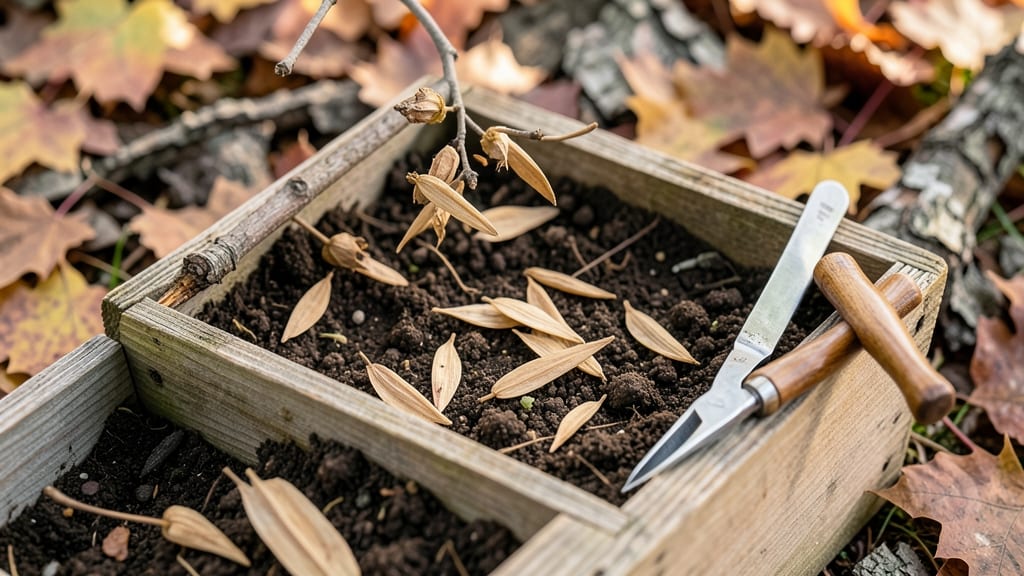
Identifying tree seeds can feel like solving a puzzle, but those winged samaras and papery pods hold the key to growing your own forest. 🌿 I’ve spent years collecting seeds from my backyard—maple helicopters, acorn caps, and sycamore puffballs—and each one tells a story about the tree it came from.
The shape, size, and texture are your first clues, but regional variations can throw you off if you’re not careful.
Start by comparing seeds to known species: acorns are round with a pointed tip, maple seeds have those iconic wings, and walnuts have a wrinkled shell. A simple magnifying glass helps spot fine details, like the fuzzy texture of a cottonwood seed or the ridged edges of a hickory nut.
Safety first—some seeds, like those from yew or black cherry, are toxic, so always double-check before handling.
Once you’ve identified them, storing seeds properly is critical. Most need a cool, dry place for a few months before planting, while others, like milkweed, sprout best fresh from the tree.
A small notebook with sketches of seed shapes and where you found them will save you from mix-ups later. You’ll start recognizing patterns in no time.
This guide covers the most common seeds you’ll find in North American yards, from shade trees to fruit-bearing varieties. Whether you’re aiming to grow a shade tree or just curious about what’s growing wild in your neighborhood, these clues will help you turn seeds into seedlings with confidence.
The Hidden Factors Behind Seed Confusion
Understanding why tree seeds can be so tricky to identify starts with recognizing the natural and environmental forces at play. Here’s a breakdown of the key reasons why even experienced gardeners or botanists might struggle to pinpoint a seed’s origin:
---
Tree seeds come in an astonishing variety of shapes, sizes, and textures—even within the same species. This diversity isn’t random; it’s an evolutionary adaptation to maximize survival and dispersal.
For example: - Winged seeds (like those from maples or ashes) rely on wind for travel, so they’re often lightweight and asymmetrical to spin efficiently. - Fleshy fruits (such as apples or cherries) attract animals, which then disperse the seeds in their droppings.
These seeds are often small and embedded in a juicy, colorful outer layer. - Hard-shelled nuts (like acorns or hickory nuts) are designed to withstand digestion or harsh conditions, making them dense and sometimes misleadingly similar in appearance.
Actionable Tip: 💡 Compare seeds to known reference images or use a seed identification key (like those from local arboretums) to account for variations within species. Some seeds even change shape as they dry or mature!
---
Seeds don’t stay static—they react to their environment, which can alter their appearance and make identification harder: - Moisture levels can cause seeds to swell, shrink, or even split open prematurely.
A freshly fallen acorn might look plump and glossy, while a dried one could appear shrunken and dull. - Temperature fluctuations can affect seed viability and structure.
For instance, seeds exposed to frost may develop cracks or discoloration, mimicking signs of decay or disease. - Soil and microbial interactions can lead to fungal growth or mold on seeds, further obscuring their natural features.
Pro Tip: ✨ Collect seeds at the peak of their maturity (usually when they’ve naturally detached from the tree) and store them in a cool, dry place to preserve their original characteristics for accurate comparison.
---
Even with the best tools, humans can misjudge seeds due to: - Overgeneralizing traits: Assuming all small, brown seeds are the same (e.g., confusing pine seeds with those of a different conifer). - Ignoring regional variations: A seed’s appearance can differ slightly based on the tree’s location—climate, soil, and local pests all play a role. - Relying on incomplete data: Some seeds resemble others so closely that even experts need multiple angles, magnified views, or genetic testing to distinguish them.
Key Takeaway: 🎯 When in doubt, cross-reference with multiple sources—books, apps (like PictureThis or Seek), or local botanical gardens. Don’t hesitate to consult a forester or arborist if you’re dealing with rare or commercially valuable species.
--- Nature’s helpers (and sometimes pests) can alter seeds before they even hit the ground: - Birds and squirrels may partially eat or damage seeds, leaving behind fragments that don’t match the original. - Insect larvae burrowing into seeds (common in nuts like walnuts) can create holes or discoloration. - Mold and bacteria from animal droppings or decaying plant matter can change a seed’s texture or color, making it look unrecognizable.
Actionable Step: 🔍 If you find seeds with unusual markings or damage, examine them under a magnifying glass or microscope to spot clues like chew marks, fungal spots, or insect trails that hint at their true origin.
--- Our brains can play tricks when judging tiny objects. A seed that looks like a pea to you might actually be a giant seed (like a lotus seed) or a cluster of tiny seeds (like a dandelion’s fluff).
Even experienced identifiers can misjudge: - Scale differences: A seed might appear large in a photo but tiny in hand, or vice versa. - Aggregated seeds: Some "seeds" are actually seed pods containing multiple seeds (e.g., milkweed or magnolia). - Seed appendages: Wings, hairs, or arils (fleshy coverings) can make seeds look larger or more complex than they are.
Pro Tip: 🌡️ Use a ruler or caliper for precise measurements and compare seeds to common household objects (e.g., a pencil eraser, coin, or paperclip) to gauge size accurately.
--- Seeds from different regions can evolve unique traits to survive local conditions: - Arid climates produce seeds with thick, water-resistant coatings (e.g., desert shrubs). - Tropical areas may yield seeds with vibrant colors or sticky resins to attract dispersers. - Mountainous regions often have seeds adapted to cold resistance, like thicker shells or slower germination rates.
Key Insight: If you’re identifying seeds outside their native range, account for climate-induced variations. For example, a maple seed grown in a wet climate might have a different wing shape than one from a drier area.
--- When two closely related tree species grow near each other, their seeds can hybridize, creating offspring with mixed traits.
This can lead to: - Unpredictable shapes or sizes (e.g., a cross between a red oak and a white oak). - Intermediate colors or textures that don’t match either parent species. - Sterile seeds that fail to grow, adding to the confusion.
Actionable Advice: 🔥 If you suspect hybridization, trace the seeds back to their parent trees and look for intermediate characteristics in the foliage or bark. Consult a genetic database or local university botanist for confirmation.
Quick Fixes for Seed ID Confusion
If you’ve ever stared at a pile of tree seeds, wondering whether they’re from a maple, oak, or pine, you’re not alone! The good news is that with the right approach, identifying them becomes much simpler.
Below are practical solutions tailored to common challenges—whether you’re dealing with tiny seeds, unfamiliar shapes, or species that look eerily similar.
---
Problem: Some seeds (like those from ash vs. walnut trees) can be nearly identical in size and shape.
Solution: - Compare with reference guides: Use a printed or digital guide (like the one in this article) to cross-check key features. - Look for subtle differences: Focus on details like: - Wing shape (e.g., maple seeds have a flat, paper-thin wing). - Surface texture (smooth vs. ridged, fuzzy vs. glossy). - Seed coat color (e.g., black walnut seeds have a dark, wrinkled shell). - Test the float: Drop seeds in water—some (like sycamore) sink, while others (like cottonwood) float.
Prevention Tip: 💡 Carry a small magnifying glass or phone app (like LeafSnap) for on-the-spot comparisons.
---
Problem: Seeds like those from birch or willow are so small they’re hard to examine.
Solution: - Use tweezers or tape: Gently pick up seeds with tweezers or stick them to tape for a closer look. - Check for clusters: Some tiny seeds (like those from pine) grow in cones—examine the cone’s structure. - Look for patterns: Tiny seeds often have distinct shapes (e.g., birch seeds are papery and triangular).
Prevention Tip: ✨ Collect seeds in a shallow tray lined with parchment paper to prevent loss.
---
Problem: You found seeds but no parent tree or fruit to reference.
Solution: - Trace back the source: If seeds are under a tree, note bark texture, leaf shape, or fruit type (e.g., acorns = oak, samaras = maple). - Dissect carefully: Split open larger seeds (like pecans) to reveal internal clues (e.g., a smooth pit vs. a fibrous center). - Season matters: Some seeds (like dandelion) appear in spring, while others (like pine) drop in fall.
Prevention Tip: 🎯 Always carry a notebook to sketch seed shapes or take photos for later reference.
---
Problem: Seeds exposed to rain or sun may lose defining traits.
Solution: - Compare fresh vs. old seeds: Keep a sample of known seeds in a dry place to compare against. - Focus on undamaged areas: Even a chipped acorn cap can reveal species clues (e.g., oak acorns have a flat cap). - Use moisture: Soak seeds briefly to reveal hidden textures or internal structures.
Prevention Tip: 🌡️ Store seeds in a cool, dry container with silica gel packets to preserve details.
--- If you’re new to seed ID, begin with these easy-to-spot species: - Maple: Helical "whirlybird" seeds. - Oak: Acorns with scaly caps. - Pine: Cones with papery wings or tiny, wingless seeds. - Dandelion: Fluffy white seed heads.
Pro Tip: 🔥 Join local gardening groups or forums—they often share regional seed guides!
--- By breaking down the problem and focusing on one clue at a time, identifying tree seeds becomes a rewarding (and fun!) skill. Grab your tools, step outside, and start matching!
Frequently asked questions
What are the easiest tree seeds to identify for beginners?
Start with these standout seeds: maple samaras (their iconic wings make them unmistakable), acorns (round with scaly caps), and pine cones (papery wings or tiny seeds in clusters). These have the most distinctive shapes and are common in most regions.
How can I tell if a seed is viable before planting?
For nuts like acorns or walnuts, tap them—they should sound hollow. For others, do a float test: Place seeds in water. Viable seeds usually sink (except for cottonwood, which floats naturally). A quick paper towel test also works—moisten a paper towel, place seeds inside, and check for sprouts in 3-7 days.
Are there dangerous tree seeds I should avoid handling?
Yes! Yew seeds (red berry-like) and black cherry pits are highly toxic if ingested. Even some edible seeds (like horse chestnut) can cause skin irritation. Always wear gloves when handling unknown seeds, and never eat them unless you’re certain of the species.
Can I use a phone app to identify tree seeds?
Apps like PictureThis, Seek, or PlantNet let you upload photos for instant matches. For seeds, focus on clear shots of shape, texture, and size (use a ruler for scale). Some apps even let you compare your find to a database of regional species.
What’s the best way to store seeds for planting later?
Keep seeds in a cool, dry place (like a sealed container with silica gel packets) for up to 6 months. Label each type with the date and location found. Some seeds (like milkweed) need stratification (cold treatment) before planting—check species-specific guidelines.