
Trees
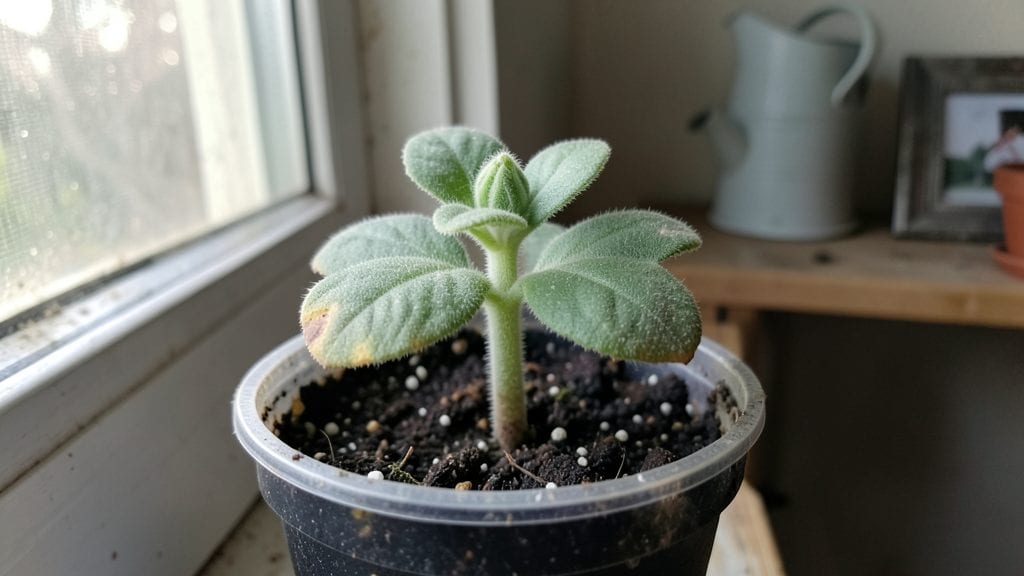
Mastering petunia seedling identification by leaf shape and color keeps you from thinning out the wrong plants—here’s how to spot them right away. 🌱 I’ve pulled up dozens of seedlings only to realize I’d kept the wrong ones—until I learned these simple tricks.
The first clue is leaf shape: round, scalloped edges mean grandiflora types, while jagged, serrated leaves signal multifloras or trailing varieties.
Healthy petunia seedlings have vibrant green leaves with a slight waxy sheen, while weak or diseased ones look dull, yellowed, or spotted. Check the spacing too—crowded seedlings with elongated stems need thinning immediately.
I’ve found that holding seedlings up to a bright window reveals subtle color differences in the veins and undersides that distinguish varieties.
By the time you’re pinching back the first blooms, you’ll recognize each type instantly. The velvety leaves of ‘Wave’ petunias contrast sharply with the crisp edges of ‘Mitchell’ hybrids, and those differences show up even in tiny seedlings.
This early identification ensures you end up with the exact colors and growth habits you planted for.
Works for both flat-packed seedlings and home-started trays, and the same rules apply whether you’re growing in a greenhouse or on a sunny windowsill. Once you’ve mastered these visual cues, thinning becomes second nature—and your summer blooms will thank you.
Common Culprits Behind Misidentification
Accurately identifying petunia seedlings can be tricky, especially when subtle differences in leaf shape, color, or growth patterns go unnoticed. Misidentification often stems from a mix of biological, environmental, and human factors. Understanding these causes helps gardeners avoid costly mistakes—like planting the wrong variety or missing early signs of disease.
Below, we break down the key reasons why petunia seedlings might be harder to identify than expected.
Petunia seedlings undergo dramatic changes as they mature, and their early leaves may look nothing like the adult plant’s foliage. This is especially true for hybrid varieties, where juvenile leaves might be broader, darker, or more lobed than the final form.
- Why it happens: Young seedlings prioritize rapid cell division over specialized leaf development. Their first true leaves (cotyledons) are often simple and rounded, while later leaves develop serrated edges or unique shapes (e.g., Petunia × atkinsiana seedlings may start with smooth leaves before developing fuzzy, gray-green foliage).
- Actionable tip: Wait until seedlings produce their third or fourth set of true leaves—this is when varietal traits like leaf texture (hairy vs. smooth) and serration patterns become more reliable for identification.
- Pro tip 💡: Use a magnifying glass to inspect leaf edges and undersides. Some varieties, like Petunia 'Storm' series, have microscopic glandular hairs that only appear under magnification.
Temperature, light, and moisture levels can warp a seedling’s natural appearance, making identification charts seem irrelevant. Stress often triggers compensatory growth, where plants alter leaf shape or color to survive.
| Stress Factor | Effect on Leaves | How to Fix It |
|---|---|---|
| Low Light | Leaves grow larger, thinner, and paler (etiolation). Variegated petunias may lose white stripes entirely. | Move seedlings to a bright, indirect light source (e.g., a south-facing window or grow lights). |
| Overwatering | Yellowing (chlorosis) or dark, glossy leaves. Some varieties (like Petunia 'Madness Pink') may develop irregular brown spots. | Ensure pots have drainage holes and water only when the top inch of soil is dry. |
| Temperature Fluctuations | Stunted growth or leaves with jagged, uneven edges (e.g., Petunia 'Wave Blue' seedlings might resemble diseased plants). | Keep seedlings in a stable environment (65–75°F during the day, 55–60°F at night). |
Key insight: Stress-induced changes can mimic disease or pest damage, leading to misidentification. For example, Powdery mildew (a fungal issue) causes white, powdery patches, while heat stress can create similar-looking leaf discoloration.
Petunias are often hybrids, and even within the same variety, seedlings can exhibit unpredictable traits due to genetic recombination. This is especially common in open-pollinated varieties or when saving seeds from hybrids.
- Why it happens:
- Cross-pollination: Bees or wind can transfer pollen between different petunia varieties, producing seedlings with mixed traits (e.g., a Petunia 'Supertunia' seedling might sprout leaves resembling Petunia 'Mitchell' if cross-pollinated).
- Incomplete dominance: Some genes (like those controlling leaf hairiness) may not express fully until later stages, making early identification unreliable.
- Actionable tip: If you’re growing from seed, label seedlings by parent plant and monitor for consistent traits across a batch. Discard outliers if purity is critical.
- Pro tip 🌡️: Use true-to-type seeds from reputable suppliers (e.g., Baker Creek Heirloom Seeds or Johnny’s Selected Seeds) to minimize variability.
Even experienced gardeners can misidentify seedlings due to confirmation bias or overlooking subtle details. For example, confusing Petunia axillaris (night-fragrant varieties) with Petunia integrifolia (smooth-leaved types) is common because their juvenile leaves look nearly identical.
- Common mistakes:
- Focusing only on flower color (which may not appear for weeks) instead of leaf morphology.
- Ignoring leaf arrangement (e.g., opposite vs. alternate leaves, which varies by species).
- Assuming all petunias have serrated leaves—some, like Petunia exserta, have smooth, entire margins.
- Actionable tip: Create a checklist for each variety, including:
- Leaf shape (lanceolate, ovate, oblong)
- Edge texture (smooth, serrated, crenate)
- Underside color (some petunias have purple-tinged undersides)
- Growth habit (trailing vs. bushy)
- Pro tip ✨: Take close-up photos of seedlings at different stages and compare them side-by-side with identification guides (e.g., Missouri Botanical Garden’s Petunia Database).
Quick Fixes for Seedling Confusion
Mistakenly swapping petunia seedlings or struggling to distinguish them from other plants? Don’t panic—these practical fixes will help you correctly identify and manage your seedlings like a pro. Below, we’ve mapped common causes to actionable solutions, plus prevention tips to keep your garden thriving.
Cause: Petunia seedlings can resemble other nightshade family plants (like tomatoes or eggplants) or even weeds, especially when young.
Fix:
- 📏 Compare leaf patterns: Petunias have smooth, slightly fuzzy leaves with serrated edges (like tiny teeth). Use a magnifying glass to check for:
- Veins: Petunias have prominent, curved veins radiating from the center.
- Color: True petunia leaves are green with a slight purple tint (especially on the underside).
- 🌱 Reference a chart: Print or bookmark a petunia seedling identification guide (like the one in this article) and cross-check leaf shapes with your seedlings.
- 🌿 Pull a test plant: If unsure, transplant one suspected seedling to a separate pot and monitor its growth. Petunias grow fast and bushy with star-shaped flowers in 6–8 weeks.
Prevention Tip: 💡 Label seedlings immediately with toothpicks and masking tape before they sprout true leaves. Write the variety name (e.g., "Surfinia Purple") to avoid mix-ups later.
Cause: Overcrowding, poor soil, or disease (like damping off) can make seedlings look unhealthy, masking their true identity.
Fix:
- 🌱 Thin seedlings early: Use sterilized scissors (dipped in rubbing alcohol) to snip off weaker seedlings at soil level. Leave 1–2 inches between plants to prevent competition.
- 💧 Check soil moisture: Overwatering causes yellowing leaves (a sign of damping off). Water only when the top inch of soil is dry and use a tray to catch excess water.
- 🌡️ Boost airflow: Place a small fan on low speed near seedlings for 1–2 hours daily to dry leaves and prevent fungal growth.
Prevention Tip: ✨ Use seed-starting mix (not garden soil) to avoid compacting roots. Add perlite or vermiculite (10%) to improve drainage.
Cause: Some petunia varieties (like ‘Wave’ or ‘Mitchell’) have silver, purple, or striped leaves, which can look alien if you’re unfamiliar. Others may develop unusual colors due to nutrient deficiencies.
Fix:
- 📊 Match colors to varieties: Refer to your seed packet or a petunia variety database. For example:
| Leaf Color | Likely Variety | Flower Color |
|---|---|---|
| Deep green with purple underside | Classic petunia (e.g., ‘Dreamies’) | Pink, purple, or white |
| Silver-gray with green veins | ‘Silver Frost’ or ‘Wave Purple’ | Purple or blue |
| Yellowing leaves | Nitrogen deficiency | No flowers (yet) |
- 💡 Test for deficiencies: Yellow leaves? Add a balanced fertilizer (10-10-10). Purple stems? It’s normal for some varieties (like ‘Supertunia’).
Prevention Tip: 🌱 Start with named varieties if you’re new to petunias—avoid mixed seed packets until you’re confident in identification.
Cause: Spider mites, aphids, or fungal infections can distort leaves, making seedlings look like a different plant.
Fix:
- 🔍 Inspect leaves closely: Look for:
- Tiny webs (spider mites).
- Sticky residue (aphids).
- White powdery spots (powdery mildew).
- 🚿 Treat gently:
- Pests: Spray seedlings with neem oil solution (1 tsp neem oil + 1 quart water) or rinse with water.
- Fungus: Dust with sulfur powder or use a baking soda spray (1 tbsp baking soda + 1 quart water + a drop of dish soap).
- 🌿 Isolate infected plants to prevent spread.
Prevention Tip: 🛡️ Use row covers or floating row cloth over seedlings to block pests without chemicals.
With these fixes, you’ll quickly spot the difference between petunia seedlings and lookalikes—no more guessing games in your garden! For extra peace of mind, take photos of your seedlings and compare them to trusted guides. Happy growing! 🌸
Frequently asked questions
How can I tell if my young petunia seedlings are healthy?
Healthy petunia seedlings have vibrant green leaves with a slight waxy sheen and no yellowing or spots. Look for sturdy stems and leaves that stand upright rather than leaning. The veins should be clearly visible and the undersides should be a consistent color—no brown patches or powdery residue.
What’s the difference between grandiflora and multiflora petunia seedlings?
Grandiflora seedlings typically have rounder, scalloped leaves and grow more upright, while multiflora varieties often show jagged, serrated edges and a more trailing growth habit. Check the leaf undersides too—grandifloras often have a slight purple tint, while multifloras may appear greener.
Why do some of my petunia seedlings look different from the seed packet description?
Hybrid varieties can exhibit unexpected traits due to genetic variation or cross-pollination. Early leaves may not resemble mature plants, and environmental stress (like temperature swings) can alter leaf shape. Always wait until the third set of true leaves appears before making final identifications.
Can I use a magnifying glass to identify petunia varieties at the seedling stage?
A magnifying glass helps reveal key details like leaf edge texture (smooth vs. serrated) and microscopic hairs on varieties like 'Storm' series. Check the vein patterns and underside colors—some petunias have purple-tinged undersides that are only visible with close inspection.
What should I do if I accidentally mixed up my petunia seedlings?
Don’t panic! Transplant one seedling from each suspected variety into separate pots and monitor their growth patterns. Petunias develop distinctive habits—trailing types will show their growth style within weeks. Label everything immediately next time to avoid mix-ups.