Vegetables
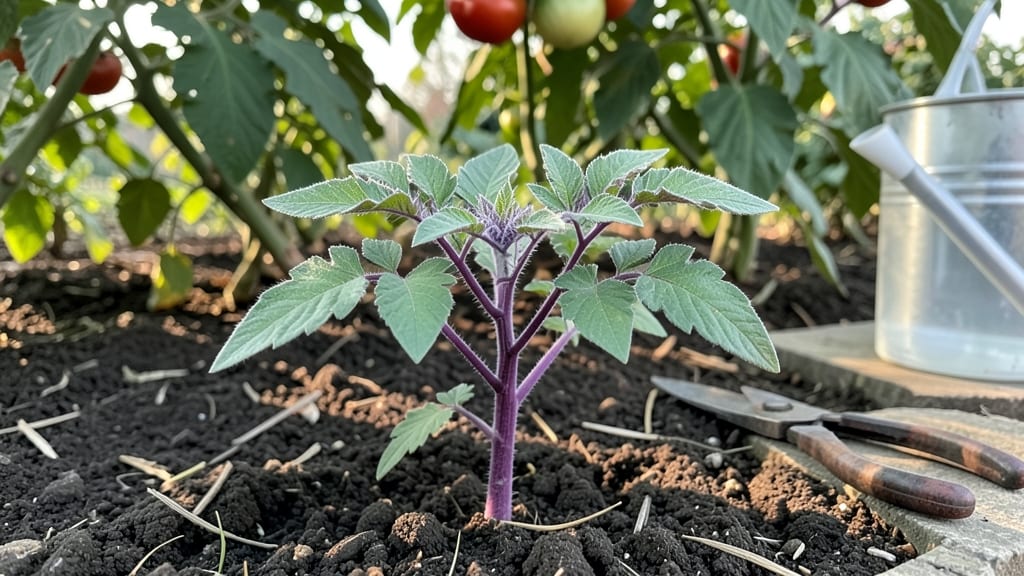
Your tomato seedlings turning purple isn't just a quirky color—it's a cry for help from your plants. 🌱 I've seen this purple hue signal everything from phosphorus overload to stress, and knowing the difference saves seedlings (and your sanity). The good news? Most purple seedlings bounce back with simple adjustments.
This isn't about fancy diagnostics—just matching symptoms to solutions. Too much phosphorus? A sprinkle of composted manure or a diluted fish emulsion can reset the balance. Light stress?
Move seedlings closer to a south-facing window or under grow lights for 14-16 hours daily. The key is acting fast before the purple spreads to stems and leaves.
Within a week of proper care, those seedlings will snap back to vibrant green. You'll see new growth pushing through, and the purple will fade like a bad memory. The best part? These fixes work for heirlooms, cherry tomatoes, and even those fancy purple-stemmed varieties you love.
Whether you're growing in seed trays or peat pots, the same rules apply. Let's turn those purple warnings into lush, productive plants before they hit the garden bed.
Root Causes Of Purple Tomato Seedlings
If your tomato seedlings are showing up purple instead of their usual green, don’t panic—it’s often a sign of something fixable! Purple leaves or stems in young tomato plants usually stem from a few key factors, each with a clear scientific explanation.
Understanding these causes will help you correct the issue and get your seedlings thriving. Let’s break down the most common reasons why this happens.
A deep purple or reddish hue on tomato seedlings is often the first sign of nitrogen deficiency. Nitrogen is a critical nutrient for chlorophyll production, and without enough of it, your seedlings struggle to photosynthesize properly.
This deficiency causes the leaves to turn purple, especially along the veins and younger growth.
Why does this happen?
- Poor soil quality: If your seed-starting mix lacks organic matter or balanced nutrients, nitrogen levels may be too low. Many commercial potting mixes are lightweight and nutrient-poor, especially after repeated use.
- Overwatering or leaching: Excessive watering can flush nitrogen out of the soil before seedlings have a chance to absorb it. This is common in sterile seed-starting mixes that don’t retain nutrients well.
- Slow nutrient uptake: Young seedlings have delicate root systems that may not efficiently absorb nitrogen, even if it’s present in the soil.
Actionable fix: Amend your seed-starting mix with a balanced fertilizer (look for one with a higher first number, like 5-5-5 or 10-10-10, indicating nitrogen content). Alternatively, use a compost tea or fish emulsion to give seedlings a quick nitrogen boost. Avoid over-fertilizing, as this can burn tender roots.
Tomato seedlings are tropical plants at heart, and they hate the cold. If your seedlings are exposed to temperatures below 50°F (10°C), especially at night, they may develop purple stems or leaves as a survival mechanism.
This condition is sometimes called anthocyanin accumulation, where the plant produces purple pigments to protect cell membranes from damage.
Why does this happen?
- Drafty or unheated environments: Placing seedlings near windows that drop below 50°F or in unheated greenhouses can trigger cold stress.
- Chilly soil temperatures: Roots struggling in cold soil can’t absorb nutrients efficiently, leading to deficiency-like symptoms.
- Sudden temperature drops: Moving seedlings from a warm indoor space to a cooler outdoor environment too soon can shock them.
Actionable fix:
- Keep seedlings in a warm, consistent environment (ideal daytime temp: 70–75°F / 21–24°C; nighttime: 60–65°F / 15–18°C).
- Use a seedling heat mat (70–75°F / 21–24°C) to maintain root warmth.
- Avoid placing seedlings in drafty areas or near cold windows.
While underwatering can cause stress, overwatering is just as damaging to tomato seedlings. Excess moisture in the soil leads to anaerobic conditions (lack of oxygen), which prevents roots from absorbing nutrients—including nitrogen—effectively. This can trigger purple discoloration as the plant struggles to function.
Why does this happen?
- Compacted or waterlogged soil: Seedlings in dense mixes or containers without drainage holes can’t breathe, leading to root suffocation.
- Inconsistent watering habits: Letting seedlings sit in soggy soil for days disrupts nutrient uptake.
- Low light + high moisture: Weak seedlings in dim light transpire less, so excess water lingers, worsening the issue.
Actionable fix:
- Ensure pots have drainage holes and use a well-aerated mix (add perlite or vermiculite if needed).
- Water only when the top inch of soil is dry—stick your finger in to check!
- Move seedlings to a brighter location (like a south-facing window or under grow lights) to encourage evaporation.
Not all purple in tomato seedlings is a problem—some varieties are naturally purple! Certain heirloom and hybrid tomatoes, like ‘Purple Calabash’ or ‘Indigo Rose’, have deep purple foliage as a genetic trait.
These plants produce anthocyanins, antioxidants that give them their striking color and may even improve disease resistance.
Why does this happen?
If you’re growing a purple-leaved tomato variety, the color is simply part of the plant’s DNA. These varieties often develop green leaves as they mature, but the purple hue may linger in stems or new growth.
How to confirm:
- Check your seed packet or plant tags—if the variety is listed as purple, it’s likely normal!
- Observe other seedlings: If only one or two plants are purple while the rest are green, genetics may be at play.
Actionable fix: If you’re growing a purple variety, no intervention is needed! Just ensure these seedlings get the same care as green ones—they’ll still produce delicious tomatoes.
💡 Pro Tip: If you’re unsure whether the purple is due to stress or genetics, wait a few days. If the color fades to green with proper care, it was likely a deficiency or environmental issue. If it stays purple, you might be growing a rare (and tasty!) heirloom!
Quick fixes for purple tomato seedlings
If your tomato seedlings are sporting unexpected purple hues, don’t panic—this is often a sign of natural growth or correctable issues. Below are practical, step-by-step solutions tailored to the most common causes, along with prevention tips to keep your seedlings thriving.
Purple stems or leaves often signal a phosphorus deficiency or excess nitrogen. Here’s how to correct it:
🔥 Step 1: Adjust Your Fertilizer
- If stems are purple but leaves are green: Your seedlings need phosphorus (the "P" in NPK).
- Switch to a balanced fertilizer (e.g., 10-10-10 or 5-10-5) or a bone meal (high in phosphorus).
- Mix 1 tsp of bone meal per gallon of water and water the soil lightly.
- ⚠️ Avoid high-nitrogen fertilizers (like blood meal or fish emulsion) until the purple fades.
- If leaves are yellow with purple stems: You’re overfeeding nitrogen.
- Flush the soil with plain water to leach excess nitrogen.
- Let the soil dry slightly between waterings to reduce runoff.
🍳 Step 2: Boost Soil Health Naturally
- Add compost or worm castings (rich in phosphorus and micronutrients).
- Use a weak compost tea (steep compost in water for 24 hours, strain, and water seedlings).
- Avoid synthetic fertilizers until the purple subsides—organic amendments work slower but prevent burnout.
💡 Prevention Tip: - Test your soil before planting (a simple DIY kit works).
Aim for a pH of 6.0–6.8—purple stems can also indicate low pH (too acidic). - Feed lightly at first: Seedlings only need a tiny amount of fertilizer (like a pinch of balanced granules per pot).
If your seedlings are purple on the undersides of leaves or along veins, they may be too cold or not getting enough light.
👨🍳 Step 1: Warm Up the Environment
- Move seedlings to a warmer spot (ideal: 70–80°F during the day, 60–65°F at night).
- Use a heat mat (set to 75°F) if seedlings are on a cold windowsill or floor.
- Avoid drafts from AC vents, open windows, or doors.
🔥 Step 2: Optimize Light Exposure
- Extend daylight with a grow light (12–16 hours/day). Purple leaves often mean etiolation (stretching toward light).
- Keep lights 2–4 inches above seedlings (closer if using LEDs, farther for fluorescents).
- Rotate trays daily so seedlings grow straight, not lopsided.
✨ Prevention Tip:
- Start seeds indoors 6–8 weeks before last frost—this gives them time to harden off before cooler outdoor temps.
- Use a clear plastic dome or row cover if moving seedlings outside too early.
If purple spots, blotches, or wilting appear, your seedlings may have early blight, bacterial spot, or root rot.
🔪 Step 1: Isolate and Inspect
- Remove affected seedlings (don’t compost them—bag and discard to prevent spread).
- Check roots: Healthy roots are white/firm; rotten roots are black/mushy.
- If roots are rotting, repot in fresh, sterile soil (mix in perlite or sand for drainage).
🌡️ Step 2: Treat Fungus or Bacteria
- For fungal issues (early blight, damping-off):
- Spray with a copper fungicide (follow label rates) or baking soda solution (1 tsp baking soda + 1 quart water + a few drops of dish soap).
- Water at the base (avoid wetting leaves) to reduce humidity.
- For bacterial spot:
- Remove infected leaves with sterilized scissors.
- Apply neem oil (1 tsp per quart of water) as a preventative spray.
🎯 Prevention Tip:
- Sterilize tools and pots between uses (soak in 1 part bleach to 9 parts water for 10 minutes, then rinse).
- Space seedlings properly (2–3 inches apart) for good airflow—crowding traps moisture and fungus.
- Avoid overhead watering—use drip irrigation or a watering can with a narrow spout.
Some heirloom or purple-fruited tomato varieties (like ‘Indigo Rose’ or ‘Black Krim’) naturally develop purple stems or leaves as they mature. This is normal!
💪 What to Do:
- No action needed—these traits will fade as seedlings grow.
- Monitor for other symptoms (like stunted growth or spots) to rule out disease.
- Label your seedlings if you’re growing multiple varieties to avoid confusion.
🥗 Prevention Tip:
- Research your tomato variety before planting—some are bred for purple foliage!
- Take photos of seedlings as they grow to track changes.
Final Pro Tip: 🌿 Purple seedlings can often be saved with quick adjustments—but act fast if you suspect disease. When in doubt, check the roots and soil moisture first!
Frequently asked questions
Is it normal for tomato seedlings to turn purple?
Not always! While some heirloom varieties like 'Purple Calabash' naturally develop purple stems or leaves, most seedlings turn purple due to stress. Check your seed packet—if the variety isn't listed as purple, it's likely a sign of nutrient imbalance, cold stress, or overwatering. The good news is these issues are usually fixable with simple adjustments.
How can I tell if my purple seedlings need fertilizer?
Look at the leaves: if they're yellowing with purple stems, you're likely overdoing nitrogen. If stems are purple but leaves stay green, your seedlings need phosphorus. Test your soil first—aim for a pH of 6.0-6.8. For quick fixes, try a balanced 5-5-5 fertilizer or compost tea. Avoid high-nitrogen fertilizers until the purple fades.
Will my tomato plants still produce fruit if they turn purple as seedlings?
Yes! Purple seedlings usually recover completely with proper care. The color change doesn't affect fruit production—it's just a stress signal. Most varieties will snap back to green within a week of correcting the issue. Just ensure you're providing consistent warmth, proper light (14-16 hours daily), and balanced nutrients. The fruits will develop normally once the seedlings recover.
Can I save my purple seedlings if they're already wilting?
It depends: if wilting is combined with purple spots or mushy stems, you may have root rot or disease. Remove affected plants immediately and repot healthy ones in fresh, sterile soil with perlite for drainage. For simple purple (no wilting), improve light and warmth—most seedlings bounce back within 3-5 days. Always check roots first before deciding whether to save them.
How long does it take for purple tomato seedlings to return to normal?
With proper care, you'll typically see improvement within 3-7 days. Start with warmth (70-75°F), proper light, and balanced nutrients. Monitor daily—if the purple spreads or darkens, you may need to adjust your approach. The fastest recovery usually comes from fixing light and temperature issues first, then addressing nutrients. Most seedlings fully recover within 2 weeks if the underlying problem is corrected.