Vegetables
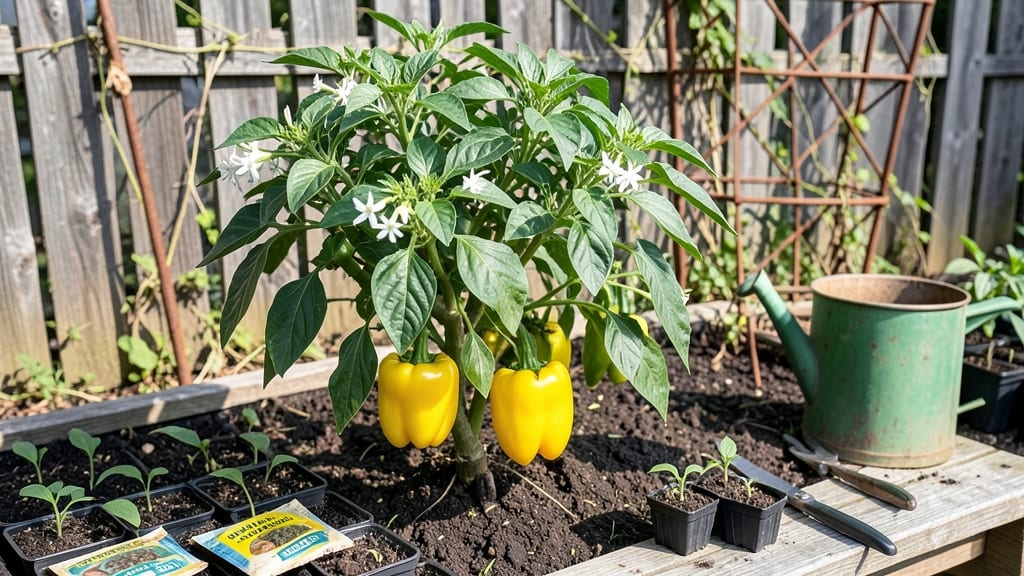
Growing yellow pepper seeds into bushy plants starts with the right timing and soil warmth—something I learned the hard way after waiting weeks for germination last spring. ✨ The secret isn’t just patience; it’s creating the ideal conditions where seeds sprout in 7-14 days instead of dragging out for three weeks.
I’ll show you how to skip the guesswork with simple adjustments that make all the difference between scraggly seedlings and sturdy, productive plants.
Most gardeners overlook two key factors: soil temperature and moisture consistency. Yellow pepper seeds need warmth—at least 70°F—to break dormancy, and keeping the soil evenly damp (not soggy) speeds up germination. I use a seedling heat mat for the first two weeks, which cuts germination time nearly in half.
The right varieties like banana peppers or yellow wax peppers also play a role—they’re faster and more reliable than some heirloom types.
By the time you’re transplanting, you’ll have plants with strong stems and vibrant leaves, ready to handle the garden’s heat. The payoff? A harvest of crisp, sweet peppers that outperform store-bought every time.
We’ll cover everything from seed selection to pest prevention—so you can go from seed to table faster than you think.
This method works for containers, raised beds, or in-ground planting, and I’ll even share my go-to schedule for staggered plantings to extend your harvest. Let’s get those seeds sprouting right the first time!
Root Causes of Slow Germination
If your yellow pepper seeds aren’t sprouting as quickly as you’d like—or at all—there’s usually a clear reason behind it. Understanding these root causes helps you troubleshoot and create the perfect conditions for fast, healthy germination. Let’s break down the science behind why seeds might struggle to sprout.
Seeds have a shelf life, and once they expire, their germination rates drop dramatically. Yellow pepper seeds, like all seeds, contain a finite amount of stored energy (in the form of starches and oils) needed to fuel the early stages of growth.
Over time, this energy depletes, and the seed’s viability declines.
🔬 Why it happens:
- Enzyme degradation: Enzymes responsible for breaking down stored nutrients (like amylase) become less active as seeds age, slowing metabolic processes.
- Membrane damage: The seed coat and internal cell membranes weaken, reducing water absorption—a critical first step for germination.
- Dormancy mechanisms: Some seeds develop secondary dormancy, where internal chemical signals (like abscisic acid) suppress germination even if conditions seem ideal.
💡 Actionable fix: Always check the seed packet for a germination rate and expiration date. Store seeds in a cool (35–45°F), dry place (like a sealed container with silica gel) to extend their viability. For older seeds, try stratification (a cold-moist treatment) or soaking in hydrogen peroxide (3%) for 1 hour to boost oxygen uptake.
Seeds need consistent moisture to activate enzymes and soften the seed coat, but too much or too little water can stall germination. Yellow pepper seeds, in particular, are sensitive to both drought and waterlogging.
🔬 Why it happens:
- Osmotic imbalance: If the soil is too dry, seeds can’t absorb enough water to trigger metabolic changes. If it’s too wet, oxygen is displaced, leading to anaerobic conditions that produce ethanol—a toxin for sprouting seeds.
- Fungal invasion: Excess moisture encourages mold growth (e.g., Pythium or Fusarium), which can rot seeds before they germinate.
- Capillary action failure: Poor drainage means seeds stay waterlogged, preventing the root (radicle) from emerging cleanly.
💡 Actionable fix:
- Use a well-draining seed-starting mix (e.g., 50% peat moss, 30% perlite, 20% vermiculite). Avoid garden soil, which compacts easily.
- Water gently with a spray bottle until the mix is evenly moist but not soggy (think of a damp sponge).
- Cover trays with plastic wrap to retain humidity, but remove it daily to prevent mold. Alternatively, use a propagation mat to maintain warmth.
Yellow pepper seeds thrive in specific temperature ranges, and deviations—whether too hot or too cold—can halt germination. These seeds are warm-season crops, meaning they rely on consistent heat to activate growth hormones.
🔬 Why it happens:
- Enzyme temperature sensitivity: Key germination enzymes (like α-amylase) have optimal temperature ranges (typically 75–85°F for peppers). Below 60°F, enzyme activity grinds to a halt; above 95°F, proteins denature.
- Metabolic slowdown: Cold soil reduces cellular respiration, starving the embryo of the energy needed to break through the seed coat.
- Microbial competition: Cool temperatures favor pathogenic fungi over beneficial microbes, increasing seed rot risk.
💡 Actionable fix:
- Use a heat mat (set to 75–85°F) under seed trays to maintain ideal temps. Avoid placing seeds near drafts or cold windows.
- If starting indoors, place trays on top of the fridge (not inside) for a passive heat source.
- For outdoor sowing, wait until soil temps reach at least 65°F (use a soil thermometer). In cooler climates, use black plastic mulch to warm the soil faster.
While many seeds germinate in darkness, yellow pepper seeds can be sensitive to light conditions, especially if sown too deeply or exposed to harsh sunlight too soon.
🔬 Why it happens:
- Photodormancy: Some seeds require darkness to germinate, but if exposed to light prematurely, they may produce ethylene gas, which can inhibit root growth.
- Overheating: Direct sunlight on shallowly sown seeds can cause desiccation (drying out) before germination.
- Seed depth stress: Planting seeds too deep (over ½ inch) can exhaust the seed’s energy reserves before it reaches light, as the hypocotyl (first stem) struggles to push upward.
💡 Actionable fix:
- Sow seeds ¼ inch deep in well-draining soil and keep them in low, indirect light (e.g., under grow lights 12–14 hours/day at 2–3 inches away) until sprouts appear.
- Use opaque seed trays or cover with a thin layer of vermiculite to block light if your setup is too bright.
- Once sprouts emerge, provide 14–16 hours of light daily to prevent leggy growth.
Even healthy seeds can fail to germinate if they’re attacked by soilborne pathogens. Yellow pepper seeds are particularly vulnerable to damping-off disease, a fungal infection that cuts down seedlings at the soil line.
🔬 Why it happens:
- Pathogen presence: Fungi like Rhizoctonia solani or Pythium thrive in moist, warm conditions, producing toxins that weaken seedling cell walls.
- Bacterial soft rot: Bacteria such as Erwinia secrete enzymes that liquefy seed tissues, preventing the radicle from emerging.
- Immunosuppressed seeds: Stressed seeds (due to poor storage or handling) have weaker defenses against microbes.
💡 Actionable fix:
- Sterilize your seed-starting mix by baking it at 180°F for 30 minutes or using a hydrogen peroxide solution (1 part 3% H₂O₂ to 9 parts water) to disinfect.
- Use fungicide-treated seeds or soak them in neem oil (1 tsp per cup of water) for 1 hour before planting.
- Space seedlings 1 inch apart to improve airflow and reduce humidity around the soil surface.
Fixing Common Pepper Seed Struggles
Growing vibrant yellow peppers from seeds can be incredibly rewarding, but even the best gardeners face challenges like slow germination, leggy seedlings, or poor yield. The good news? Most issues have simple, actionable solutions.
Below, we’ve mapped out the most common problems—along with practical fixes and prevention tips to keep your pepper plants thriving from seed to harvest.
Cause: Cold soil, old seeds, or improper moisture levels. Fix It:
- Warmth Boost 🔥: Pepper seeds need consistent warmth (70–85°F) to sprout. Place seeds in a seedling heat mat or nestle them near a sunny windowsill. A clear plastic dome or ziplock bag creates a mini greenhouse effect.
- Soak Before Planting 💧: Soak seeds in warm water for 4–6 hours before sowing to jumpstart hydration. Drain well to avoid rot.
- Proper Depth 📏: Plant seeds ¼ inch deep—too shallow, and they’ll dry out; too deep, and they won’t break through the soil.
Prevention Tips: ✅ Use fresh seeds (store-bought or saved from last year’s healthiest peppers). ✅ Keep soil moist but not soggy—think "damp sponge," not swamp. ✅ Test soil temperature with a thermometer—if below 65°F, delay planting or use a heat source.
Cause: Overcrowding, insufficient light, or inconsistent watering. Fix It:
- Thin Seedlings 🌱: Once seedlings have 2–3 true leaves, snip the weakest ones with scissors (leave the strongest 2–3 inches apart). This prevents competition for nutrients.
- Light Therapy 💡: Move seedlings under grow lights (12–16 hours/day) if natural light is dim. South-facing windows may not suffice—supplement with a LED bulb 2–3 inches above plants.
- Fertilizer Kickstart 🌱: After thinning, feed with a balanced liquid fertilizer (5-5-5 or 10-10-10) diluted to half strength. Avoid over-fertilizing—this causes more harm than good!
Prevention Tips: ✅ Start with larger containers (2–3 inches deep) to reduce transplant shock. ✅ Rotate trays daily to ensure even light exposure. ✅ Hardening off 🌡️: 1 week before outdoor planting, gradually expose seedlings to outdoor conditions (start with 1 hour, then increase daily).
Cause: Temperature swings, nutrient deficiencies, or stress from transplanting. Fix It:
- Stabilize Temperatures 🌡️: Peppers need daytime temps of 70–85°F and nighttime temps above 60°F. Use row covers or shade cloth if temps dip too low.
- Pollination Help 🐝: If peppers aren’t setting fruit, gently shake plants daily or use a small paintbrush to transfer pollen between flowers.
- Boost Calcium & Phosphorus 💊: Yellowing leaves or weak stems? Feed with calcium-rich compost or a tomato/pepper fertilizer (high in P and K). Eggshell tea (steep crushed shells in water for 24 hours) is a free, natural remedy.
Prevention Tips: ✅ Plant in well-draining soil mixed with compost or aged manure. ✅ Water at the base (avoid wetting leaves to prevent disease). ✅ Mulch heavily to retain moisture and regulate soil temp.
Cause: Fungal spores, aphids, or soil-borne pathogens. Fix It:
- Neem Oil Spray 🌿: Mix 1 tbsp neem oil + 1 tsp mild soap + 1 quart water. Spray every 7–10 days to deter aphids, spider mites, and fungal issues.
- Copper Fungicide 🛡️: For powdery mildew or early blight, use a store-bought copper spray or make your own (1 tbsp copper sulfate + 1 gallon water—test on a small area first!).
- Crop Rotation 🔄: If replanting peppers in the same spot, wait 3 years to break disease cycles.
Prevention Tips: ✅ Inspect plants weekly—catch pests early! ✅ Remove diseased leaves immediately and dispose of them in the trash (not compost). ✅ Encourage beneficial insects like ladybugs or lacewings with dill or marigold companion plants.
- Seedling Trays vs. Pots 🏺: Use biodegradable pots (like peat or coconut fiber) to avoid root disturbance when transplanting.
- Succession Planting 📅: Sow new seeds every 2 weeks for a continuous harvest.
- Save Your Best Seeds 🌶️: Let the healthiest, most flavorful peppers mature fully, then scoop out seeds, dry them, and store in a cool, dark place for next year!
With these fixes, your yellow pepper seeds will go from tiny specks of potential to bushy, productive plants in no time. Happy growing! 🌱🔥
Frequently asked questions
How long does it take for yellow pepper seeds to germinate?
Most yellow pepper varieties sprout within 7-14 days under ideal conditions. Use a heat mat to maintain 75-85°F soil temps and keep the seed-starting mix consistently moist (not soggy). Some heirloom types may take up to 3 weeks, so patience is key!
Can I save seeds from store-bought yellow peppers?
Yes, but only if the peppers are labeled "heirloom" or "open-pollinated." Scoop seeds from fully ripe peppers, rinse them, and dry on a paper towel for 3-5 days before storing in a cool, dark place. Store-bought hybrids won't produce true-to-type peppers from saved seeds.
Why are my yellow pepper seedlings growing tall and leggy?
Leggy seedlings usually mean they're not getting enough light. Move them under grow lights 2-3 inches away for 14-16 hours daily or rotate trays near a sunny window. Thin crowded seedlings to 2-3 inches apart and use a balanced fertilizer (diluted to half strength) to encourage bushier growth.
What's the best way to harden off pepper seedlings before transplanting?
Start 1 week before moving outdoors by placing seedlings in a sheltered spot for 1 hour daily, gradually increasing time. Acclimate them to wind and direct sun over 5-7 days. Avoid transplanting when temps drop below 55°F or exceed 90°F.
How do I prevent damping-off disease in my pepper seedlings?
Use sterilized seed-starting mix and space seedlings 1 inch apart for airflow. Water from below (using trays) instead of overhead, and avoid overcrowding. A neem oil spray (1 tbsp oil + 1 tsp soap per quart of water) applied weekly can deter fungal spores.