Propagation
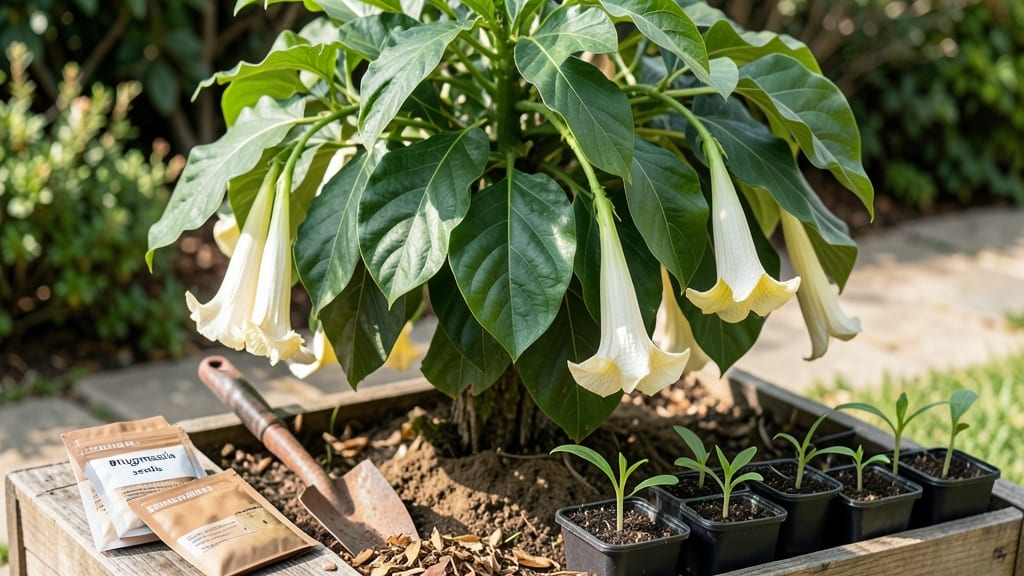
Soaking devil’s trumpet seeds overnight cuts germination time from weeks to days—trust me, I’ve waited through enough slow starts to know the difference. 🌱 These seeds need a little coaxing before they’ll even think about sprouting, and the right soaking trick makes all the difference between a patiently hopeful gardener and one who gives up after three months.
The key isn’t just water—it’s the right temperature and timing that tricks the seed into thinking spring has already arrived.
You’ll need just three things: a warm spot (like your sink or a sunny windowsill), a bowl of room-temperature water, and a little patience.
Most people skip the soaking step and end up staring at damp soil for months, but this method gives you visible sprouts in 7-14 days—not the 6-8 weeks you’d expect from dry seeds. The secret? Mimicking the tropical conditions these plants love, even before they hit the soil.
What you’ll end up with are sturdy little seedlings ready to take their place in your garden, their glossy leaves reaching for the light. The payoff isn’t just speed—it’s confidence.
No more wondering if your seeds are still alive or if you’ve wasted your money. Plus, once you master this, you’ll see faster results with other tricky seeds too.
Fair warning: devil’s trumpet isn’t for kids or pets—every part is toxic, so keep it out of reach. But with the right care, you’ll have a thriving, fragrant plant that’s worth the caution. Let’s get those seeds sprouting!
📚 In This Guide
- What you need
- Instructions
- Tips and common mistakes
- Wrapping up and next steps
What you need
- ● Devil’s trumpet seeds: 10–20 seeds (adjust based on your planting goals). Opt for fresh, high-quality seeds for best results.
- ● Water: 1 cup of room-temperature, filtered, or distilled water (chlorine-free for seed health).
- ● Glass jar or container: A small, clean mason jar or airtight container (8–16 oz) with a lid.
- ● Paper towel or coffee filter: 1–2 sheets (for draining excess water during soaking).
- ● Plastic wrap or damp cloth: To maintain humidity during the soaking process.
- ○ Spray bottle: For misting seeds if needed (optional but helpful for moisture control).
- ● Fine-mesh strainer or colander: For rinsing seeds gently after soaking.
- ● Label and marker: To track soaking dates and seed varieties.
- ○ Heating pad or warm location: A seedling heat mat (optional) or a sunny windowsill to encourage faster germination.
- ● Planting medium: Seed-starting mix or coconut coir (for transplanting post-soaking).
- ● Gloves (recommended): Devil’s trumpet contains toxic compounds—handle seeds with care!
How to prep devil's trumpet seeds for quick germination
Here's my proven method to break dormancy and get these tricky seeds sprouting in record time.
🌱 Step 1: Select and Examine Your Seeds
Start by choosing plump, firm seeds from your packet—avoid any that feel soft or shriveled. Devil's trumpet seeds have a tough outer coating that resists water, so I always soak them first. Place them in a small bowl and cover with lukewarm water (not hot) for 12 hours. This softens the seed coat and kickstarts germination.
After soaking, gently rub the seeds between your fingers to remove any remaining outer layers. You'll see a slight texture change—they'll feel smoother and more pliable. This step is crucial because the seed coat can block moisture, leaving seeds dormant for months.
💧 Step 2: Prepare the Germination Medium
Use the moistened paper towels to create a cozy environment for sprouting. Fold them into a thick pad and place in a shallow container. Spritz with warm water until evenly damp but not dripping. Devil's trumpet seeds need consistent moisture to germinate, so I keep the towels in a sealed plastic bag to maintain humidity.
Arrange the prepped seeds in a single layer on the towels, spacing them about ½ inch apart. This prevents overcrowding and makes it easier to monitor progress. Place the container in a warm spot—75-80°F works best. You'll see tiny white roots emerge within 3-5 days, signaling it's time to move them to soil.
⏰ Step 3: Transfer Sprouted Seeds to Soil
Once roots reach about ¼ inch long, carefully lift each seed with tweezers and plant them ½ inch deep in your prepared pots. I use a lightweight, well-draining mix to prevent rot. Gently firm the soil around the seeds but avoid compacting it—you want roots to push through easily.
Keep the soil consistently moist (not soggy) until the first true leaves appear. This usually takes 7-10 days. Devil's trumpet seedlings are delicate, so I cover the pots with a clear plastic dome to retain warmth and humidity. Remove it once the seedlings show their first set of leaves—this prevents fungal issues.
☀️ Step 4: Provide Ideal Growing Conditions
Move the pots to a bright spot with indirect light for the first week. Direct sun can scorch young seedlings. Once they're established, gradually introduce morning sun to harden them off. Devil's trumpet thrives in partial shade, so avoid full sun until they're at least 4 inches tall.
Water gently at the base to keep soil evenly moist. You'll know you're doing it right when the top inch of soil feels slightly damp but not wet. Overwatering is the fastest way to lose these seedlings—always check before watering. Within 6-8 weeks, you'll have sturdy young plants ready for transplanting or container growth.
Tips & tricks for devil's trumpet seed germination
Breaking dormancy with these tricky seeds is all about precision—here's what I've learned to make the process smoother and faster.
The Soaking Secret: That 12-hour lukewarm water soak is non-negotiable for Devil's trumpet seeds. Cold water won't penetrate their tough coats, while hot water can damage the delicate embryos inside. I use a kitchen scale to ensure the water temperature stays between 70-80°F—just warm enough to feel comfortable to the touch. Trust me on this: skipping this step means waiting months for germination instead of days.
Seed Prep Technique: When you rub the seeds between your fingers after soaking, you're not just removing the outer layer—you're creating micro-cracks that let moisture penetrate deeper. I find using a clean kitchen towel helps grip the seeds better than bare hands. Don't worry if a few seeds crack open slightly; this is actually good news as it signals the seed coat is breaking down. The goal is to make them feel noticeably smoother, not pulverized.
Germination Environment: The 75-80°F temperature range is critical because Devil's trumpet seeds are tropical plants. I place my germination containers on top of my refrigerator (not inside) where it stays consistently warm. If your home runs cooler, consider using a seedling heat mat set to 80°F—this can cut your germination time by nearly half. The sealed plastic bag creates a mini greenhouse effect, but check daily to ensure no condensation is dripping onto the seeds.
Root Monitoring: Those 3-5 days until roots appear can feel like forever, but there's a trick to speed things up. After planting on paper towels, I gently lift one corner of the bag each morning to let fresh air circulate—this prevents mold while keeping humidity high. Look for tiny white threads emerging from the seeds; once they reach about ¼ inch, they're ready for soil. Pro tip: Use a magnifying glass if your eyes aren't what they used to be!
Pro Tips for Devil'S Trumpet Seeds
- Breaking dormancy with these tricky seeds is all about precision—here's what I've learned to make the process smoother and faster.
- The Soaking Secret: That 12-hour lukewarm water soak is non-negotiable for Devil's trumpet seeds.
- Seed Prep Technique: When you rub the seeds between your fingers after soaking, you're not just removing the outer layer—you're creating micro-cracks that let moisture penetrate deeper.
Frequently asked questions
Got questions about devil’s trumpet seeds and their soaking tricks? You’re not alone!
Here’s a quick rundown of the most common queries—because even the pros need a little clarity now and then.
Why do devil’s trumpet seeds need soaking before planting?
Devil’s trumpet seeds have a thick, hard outer shell that resists water absorption. Soaking (or scarifying) softens the seed coat, allowing moisture to penetrate and triggering faster germination. Think of it like breaking the seal on a stubborn jar—patience pays off! Without soaking, these seeds can take weeks (or never) to sprout.
How long should I soak devil’s trumpet seeds?
For best results, soak seeds in warm water for 24–48 hours, changing the water every 12 hours to prevent mold. Avoid over-soaking—seeds can absorb too much water and rot. Pro tip: Place a damp paper towel in a sealed bag with the seeds for a gentler, more controlled approach.
What’s the ideal water temperature for soaking?
Warm water (around 70–80°F) speeds up the soaking process and mimics natural conditions. If your tap water is cold, let it sit for a few minutes to reach room temperature. Avoid boiling water—it can damage the seed’s delicate inner structure. A simple trick: Use a bowl of warm water and let it cool slightly before adding seeds.
Can I use alternatives to soaking, like sandpaper or hot water?
If you’re short on time, scarification (lightly sanding or nicking the seed coat with a knife) can work. For hot water, dip seeds in 180°F water for 1–2 seconds, then immediately cool them in cold water. However, soaking remains the safest and most reliable method for devil’s trumpet seeds.
What if my soaked seeds still won’t sprout?
Don’t panic! Try these troubleshooting steps:
- Check viability: Test a few seeds by cutting them open—if the inside is hard or discolored, they may be old or stored improperly.
- Adjust moisture: Ensure your planting medium stays consistently damp (not soggy) and well-draining.
- Warmth matters: Devil’s trumpet seeds thrive in 75–85°F soil. Use a heat mat if your environment is cooler.
- Patience: Some seeds take 3–6 weeks to germinate—resist the urge to replant!
Wrapping up and next steps
Mastering the devil’s trumpet seeds soaking trick unlocks faster, healthier sprouts—no gardening degree required! 🌱 With the right prep, patience, and a dash of creativity, you’ll turn tiny seeds into thriving plants in record time.
Whether you’re a seasoned propagator or a curious beginner, this method proves that even the trickiest seeds can be tamed with the right approach.
Ready to level up your garden game? Start small—try soaking a few seeds this week and observe the magic unfold. Once you’ve got the hang of it, experiment with other slow-to-sprout varieties. Your green thumb is closer than you think! 🌿