Plants
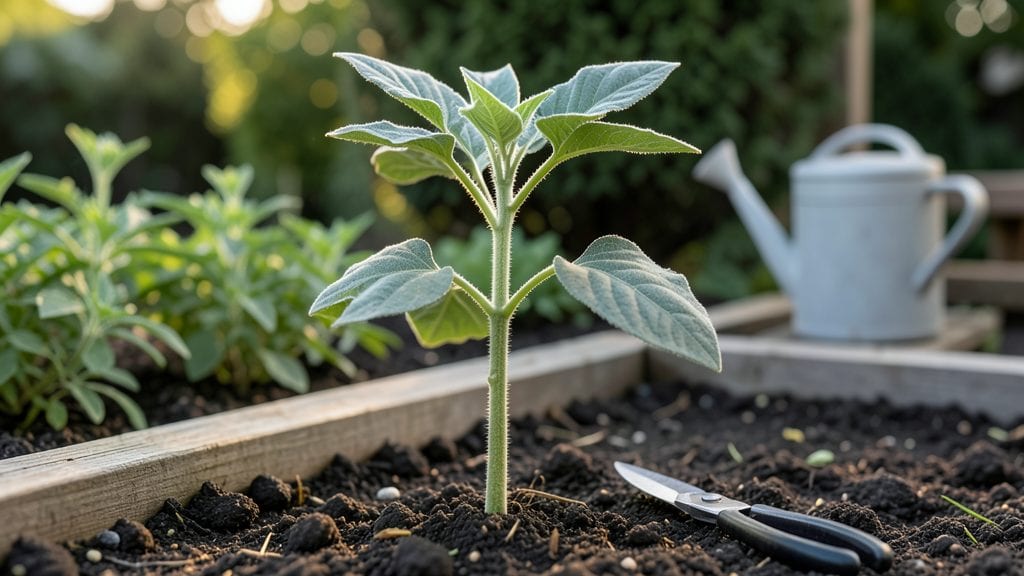
Mastering eggplant seedling identification is the first step to avoiding a bitter surprise—what you yank as weeds might just be your future harvest. ✨ The first set of leaves (called cotyledons) look nothing like mature eggplant foliage, and many beginners mistake them for weeds or even tomato seedlings.
I’ve pulled out more "volunteer" eggplants than I’d like to admit, so I learned the hard way: those initial leaves are broad, rounded, and thick, while true eggplant leaves are jagged-edged and serrated like a saw blade.
True eggplant seedlings reveal themselves after the second set of leaves emerges—look for deep, uneven serrations along the edges and a slightly fuzzy texture on the underside. The stems are sturdy but hairy, not smooth like tomatoes or peppers.
If you’re still unsure, check the seed packet: eggplant seedlings grow slower than tomatoes but faster than peppers, so timing can be a clue too. Most gardeners spot the difference within 5 minutes once they know what to look for.
Once you’ve confirmed those serrated leaves, you’ll know you’re on track for dark purple (or white, black, or striped) eggplants by summer. The key is patience—those early leaves fall off naturally as the plant matures, so don’t panic if they look "wrong."
By the time the plant is 6 inches tall, the shape will be unmistakable, and you’ll be one step closer to homegrown Italian caprese salads or roasted eggplant dishes.
This method works for both store-bought seedlings and home-started ones, and it’s especially useful if you’re growing in shared spaces where weeds or other crops might sneak in.
Pro tip: snap a photo of your confirmed seedlings and compare it to future sprouts—your eyes will train faster than you think. Now, let’s get those plants thriving!
Common Causes of Misidentification
Identifying eggplant seedlings correctly can be tricky, especially when distinguishing between true leaves (the first pair of real leaves) and false leaves (seed leaves or cotyledons). Missteps often happen due to environmental, biological, or human factors.
Understanding these causes helps you avoid confusion and ensures healthy seedling growth. Let’s break down the most common reasons why misidentification occurs.
Eggplant seedlings, like many plants, follow a predictable growth pattern. The first leaves to appear are cotyledons (false leaves), which are simple, rounded, and lack the complex structure of true leaves. Many gardeners confuse these with true leaves because they resemble miniature versions of mature foliage.
True leaves, on the other hand, are more elongated, jagged, or lobed (depending on the eggplant variety) and appear after the cotyledons. Without familiarity with these stages, even experienced gardeners might mislabel the first true leaves as false or vice versa.
Actionable tip: Study seedling anatomy—true leaves typically emerge in pairs and have a more defined vein structure. Use a magnifying glass if needed!
Stressors like temperature fluctuations, poor lighting, or inconsistent moisture can distort leaf growth, making identification harder. For example:
- Cold stress: Eggplant seedlings thrive in warm conditions (70–80°F). If temperatures drop below 50°F, seedlings may develop stunted, discolored, or malformed leaves—mimicking the appearance of false leaves even when true leaves are present.
- Low light: Insufficient sunlight can cause seedlings to grow etoliated (long, weak stems with small, pale leaves). These underdeveloped leaves may be mistaken for cotyledons.
- Overwatering or drought: Both extremes can lead to leaf curling, yellowing, or premature dropping, obscuring the true leaf structure.
Actionable tip: Maintain a stable environment with consistent warmth (use a heat mat if needed) and bright, indirect light (grow lights work well). Monitor soil moisture—keep it evenly damp but not soggy.
Not all eggplant varieties follow the same leaf development timeline or morphology. Some heirloom or hybrid seedlings may produce:
- Early true leaves that resemble cotyledons: Certain varieties have true leaves that are broad and smooth, closely mimicking cotyledons in shape.
- Delayed true leaf emergence: Some seedlings take longer to develop true leaves, leaving gardeners second-guessing what they’re seeing.
- Variegated or unusual leaf patterns: If your seedlings have striped, spotted, or asymmetrical leaves, these traits can mask the typical true-leaf structure.
Actionable tip: Research your specific eggplant variety’s growth habits. If unsure, wait for the second set of leaves—these are almost always true leaves, even if the first pair is ambiguous.
Rushing or overlooking details is a common pitfall. For instance:
- Skipping the count: Cotyledons always appear in pairs. If you see a single leaf, it’s likely a true leaf.
- Ignoring leaf attachment: True leaves attach higher up the stem than cotyledons, which emerge directly from the seed.
- Assuming symmetry: False leaves are usually identical in size and shape, while true leaves may vary slightly as the seedling matures.
Actionable tip: Use a seedling identification chart or take daily photos to track changes. Label each leaf as it appears to avoid confusion.
By recognizing these causes, you’ll sharpen your ability to spot true eggplant leaves quickly and confidently. Next, we’ll dive into how to distinguish them in under 5 minutes—no guesswork required!
Fixing Common Seedling Confusion
Now that you know why eggplant seedlings can look misleading, let’s tackle how to solve the most common issues—whether it’s misidentifying leaves, stunted growth, or other early-stage problems. Below are practical, step-by-step solutions tailored to each cause, plus prevention tips to keep your seedlings thriving.
Problem: You’re staring at your seedling, wondering, “Is this a true leaf or cotyledon?” and second-guessing every sprout.
Fix It:
- 🔍 Inspect the Shape & Structure
- False (cotyledons): Thick, rounded, and often glossy. They’re the first two leaves that appear and look like tiny eggplants themselves.
- True Leaves: Narrower, serrated edges, and more delicate. They’ll grow after the cotyledons fall off (or wither).
- Pro Tip: 💡 Snap a photo of both types side by side—future you will thank present you!
- 📏 Measure Growth Timing
- Cotyledons appear 3–7 days after germination.
- True leaves show up 7–14 days later (varies by variety).
- If your seedling has only thick, round leaves after 2 weeks, it’s likely still in the cotyledon stage.
- 🌿 Encourage True Leaf Growth - Light: Move seedlings to a bright spot (south-facing window or grow lights).
Weak light = delayed true leaves. - Water: Keep soil moist but not soggy—overwatering stresses seedlings. - Fertilizer: Wait until true leaves appear before adding diluted seaweed extract or balanced fertilizer (5-5-5).
Prevention: ✨ Label your seedlings the moment cotyledons appear. Write “Cotyledons” on a popsicle stick and stick it in the pot—no more guesswork! ✨ Use a seedling heat mat (70–75°F) to speed up germination and true leaf emergence.
Problem: You planted seeds weeks ago, but nothing’s sprouting. Did you kill them?
Fix It:
- 🌡️ Check Soil Temperature & Moisture
- Eggplant seeds need warm soil (70–85°F). If your soil is cold (<60°F), germination stalls.
- Solution: Use a seedling heat mat or place pots in a warm, dark spot (like on top of the fridge) until sprouts appear.
- 💧 Reassess Watering
- Too dry? Seeds may not have absorbed enough moisture.
- Too wet? They could rot before sprouting.
- Fix: Soak the soil with a spray bottle (mist, not drown) and cover with plastic wrap to retain humidity. Check daily for dampness.
- 🔄 Test Seed Viability
- If seeds are older than 1 year, germination rates drop.
- Test: Soak 5 seeds in water overnight. If 3+ sink, they’re likely viable. If not, replant fresh seeds.
Prevention: 🎯 Pre-soak seeds for 4–6 hours in warm water before planting to jumpstart germination. 🎯 Use sterile seed-starting mix (not garden soil) to prevent damping-off disease.
Problem: Your seedlings are tall, thin, and flopping like overgrown noodles—classic “etoliation” from poor light.
Fix It:
- 💡 Boost Light Immediately
- Move seedlings within 2–3 inches of grow lights (12–16 hours/day).
- If using natural light, rotate pots daily so they don’t lean toward the window.
- **🍽️ Fertilize Lightly (But Right)
- Use: Fish emulsion (1-2-2) or worm castings for balanced nutrients.
- Dose: Half-strength solution every 10–14 days.
- 🌱 Bury Deeper (Gently!)
- Gently
- Warning: Don’t bury cotyledons—they won’t photosynthesize underwater!
Prevention: ✨ Start with a deep tray (3–4 inches) so seedlings have room to grow roots before transplanting. ✨ Use reflective surfaces (like aluminum foil) under trays to maximize light bounce.
Problem: Tiny holes, yellow spots, or moldy stems—your seedlings are under siege!
Fix It:
| Issue | Cause | Solution |
|---|---|---|
| Black, mushy stems | Damping-off (fungus) | Remove affected seedlings. Drench soil with hydrogen peroxide (1 tsp/gallon) or copper fungicide. |
| Holes in leaves | Flea beetles | Spray with neem oil or cover with fine mesh. Handpick beetles if possible. |
| Sticky residue | Aphids | Blast off with water or rub with soapy water (1 tsp mild soap/gallon). |
| Wilting despite water | Root rot | Repot in fresh, dry mix and reduce watering. Add perlite for drainage. |
Prevention: 🔥 Sterilize tools with rubbing alcohol before handling seedlings. 🔥 Space seedlings to improve airflow (prevents fungal spread). 🔥 Rotate crops—don’t plant eggplants in the same spot next year if diseases were an issue.
Final Pro Tip: 🌱 Keep a seedling journal! Note planting dates, light conditions, and growth stages. Over time, you’ll spot patterns and adjust faster.
With these fixes, your eggplant seedlings will go from “What even is this?” to “Healthy and ready to transplant!” in no time. 🚀
Frequently asked questions
How do I tell if my eggplant seedling’s first leaves are cotyledons or true leaves?
Cotyledons appear first as thick, rounded leaves that look like tiny eggplants. True leaves emerge later with jagged, serrated edges and a more delicate texture. Check the timing—cotyledons show up 3–7 days after sprouting, while true leaves appear 7–14 days later.
Can I transplant eggplant seedlings before true leaves appear?
No, wait until true leaves emerge—this means the seedling has developed a stronger root system. Transplanting too early stresses the plant. Aim for seedlings with 2–3 sets of true leaves before moving them outdoors or to larger pots.
Why do my eggplant seedlings look like tomato or pepper seedlings?
Early-stage seedlings often share similarities, but eggplants have hairy stems and deeply serrated leaves (like a saw blade). Tomatoes have smoother leaves, while peppers have broader, waxier foliage. Compare side by side with a seedling guide if unsure.
What should I do if my eggplant seedling’s cotyledons fall off?
Don’t worry—this is normal! Cotyledons wither and drop as true leaves take over. Just ensure the soil stays moist and the seedling gets bright light to support new growth. If the stem looks weak, add a small stake for support.
How can I speed up true leaf development in my eggplant seedlings?
Boost warmth with a heat mat (70–75°F) and provide 12–16 hours of grow light daily. Avoid fertilizing until true leaves appear—focus on keeping soil evenly moist instead. Patience is key, but proper conditions help true leaves emerge faster.