Picking
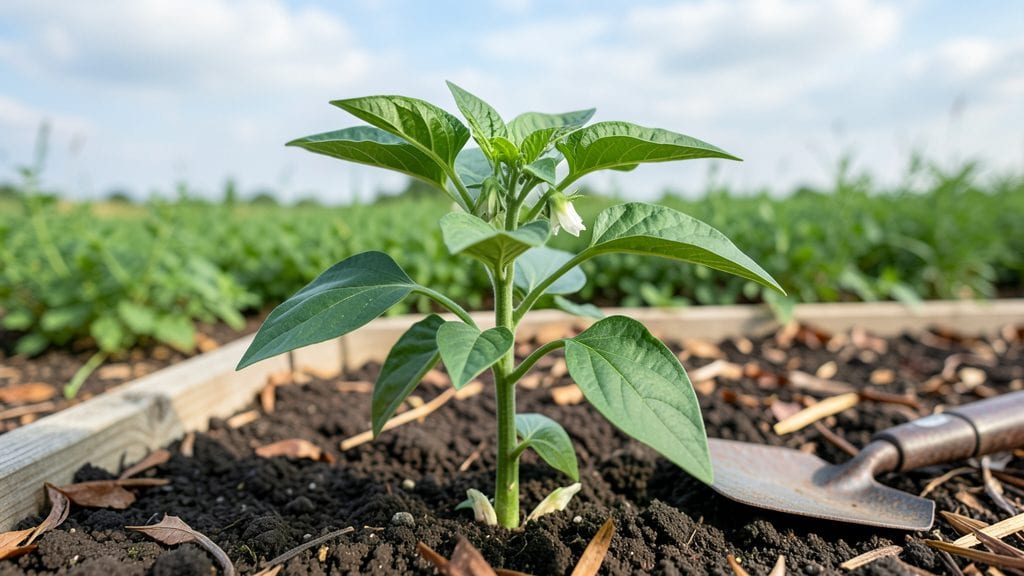
Mastering pepper seedling identification by leaf shape and stem color prevents costly transplanting mistakes—especially when those tiny seedlings look eerily alike at first glance. 🌱 I’ve pulled up enough mistakenly transplanted tomatoes to know how frustrating this can be. and the key is in those first true leaves and the subtle color shifts in the stems.
Bell pepper seedlings start with broad, rounded leaves and sturdy stems that turn a rich green, while jalapeños and habaneros show up with narrower, serrated leaves and stems that often have a faint reddish tint.
Tomatoes, by contrast, have jagged leaves that look like they’ve been cut with pinking shears, and their stems stay uniformly green. The difference becomes obvious once you know what to look for.
Healthy pepper seedlings should have thick stems, vibrant leaves, and no signs of yellowing or wilting—these are the ones you’ll want to transplant.
By the time they’re 4-6 inches tall, their true characteristics will be unmistakable, and you’ll be able to confidently separate your bell peppers from your jalapeños without a second guess.
This method works for any pepper variety, whether you’re growing from seed or buying young plants. Once you’ve mastered these visual cues, you’ll never waste time or space on the wrong seedlings again—and that’s a harvest worth protecting.
Common Causes Of Seedling Confusion
Understanding why pepper seedlings can be tricky to identify is the first step toward mastering their early growth stages. Misidentification often stems from a mix of biological factors, environmental conditions, and human error.
Below, we break down the key reasons why even experienced gardeners sometimes struggle to tell their bell peppers from their jalapeños—or why a seedling might look nothing like its parent plant.
🌱 The "Surprise Sibling" Effect
Pepper plants, like many vegetables, exhibit genetic variation even within the same variety. This happens because: - Hybridization: If you’re growing heirloom or open-pollinated seeds, cross-pollination can create seedlings that don’t match the expected traits.
For example, a 'Jalapeño' plant might produce a seedling with thinner leaves or a slightly different stem hue due to accidental pollination from a nearby 'Serrano.' - True vs. False Seeds: Some peppers produce parthenocarpic seeds (developing without fertilization), which may not inherit the parent plant’s exact characteristics.
These seedlings can sprout with unpredictable leaf shapes or slower growth rates. - Seed Quality Issues: Old, stored, or low-quality seeds may not germinate true to type, leading to seedlings that don’t resemble the packet’s description.
Actionable Fix:
- Start with certified organic seeds from reputable suppliers to minimize genetic surprises.
- If growing from saved seeds, isolate pepper varieties by at least 20 feet to prevent cross-pollination.
- Test a few seedlings before transplanting—if they look inconsistent, consider pulling them to avoid confusion later.
🌡️ When Conditions Go Rogue
Seedlings don’t always emerge looking like their mature counterparts because stress during germination can alter their early development. Common culprits include: - Temperature Fluctuations: Peppers prefer 70–85°F (21–29°C) for germination.
If soil temps dip below 60°F (15°C) or spike above 90°F (32°C), seedlings may grow stunted, yellowed, or irregularly shaped leaves—making them harder to ID. - Moisture Imbalance: Overwatering can lead to damping-off (a fungal disease causing weak, dark stems), while underwatering stresses seedlings, resulting in purple stems (a sign of phosphorus deficiency) or crinkled leaves. - Light Exposure: Seedlings grown in low light (e.g., under a weak grow light or in shade) develop long, leggy stems and small, pale leaves—far from the bushy, vibrant look of healthy peppers.
Actionable Fix:
- Use a seedling heat mat to maintain consistent soil temps.
- Keep moisture even—water only when the top inch of soil is dry, and avoid soggy trays.
- Provide 12–16 hours of bright light daily (LED grow lights work best for young seedlings).
🧪 When Soil Sends Mixed Signals
Pepper seedlings are sensitive to nutrient imbalances, which can distort their appearance: - Nitrogen (N) Deficiency: Leads to yellowing leaves (chlorosis) starting at the older leaves, making seedlings look weak or diseased.
Overdoing nitrogen can cause excessive leaf growth at the expense of stem strength. - Phosphorus (P) Deficiency: Causes dark green or purple stems and leaves, mimicking stress from cold or drought. - Calcium (Ca) Deficiency: Results in blossom-end rot-like symptoms in seedlings (brown, mushy spots on leaves or stems), though this is rare in young plants. - Salt Burn (Over-Fertilization): Too much fertilizer (especially synthetic blends) causes leaf tip burn, crispiness, or stunted growth, making seedlings look unhealthy.
Actionable Fix:
- Start with sterile seedling mix (no compost or fertilizer) for the first 2–3 weeks.
- If using liquid fertilizer, dilute to half-strength for young seedlings.
- Flush the soil with plain water every 2–3 weeks to prevent salt buildup.
🐛 The Silent Saboteurs
Even tiny seedlings aren’t safe from pathogens and pests, which can warp their natural appearance:
- Fungal Infections (Damping-Off, Powdery Mildew): Cause dark, mushy stems or white powdery coatings on leaves, making seedlings look diseased or dead before they even get a chance to grow.
- Aphids or Spider Mites: These pests distort leaves (curl or pucker them) and inject toxins, leading to stunted, irregular growth.
- Wireworms or Cutworms: Chew through stems, creating uneven growth or sudden wilting—making it hard to identify the plant’s true form.
Actionable Fix:
- Sanitize tools and trays with a 10% bleach solution between uses.
- Use neem oil or insecticidal soap (diluted) if pests appear.
- Space seedlings properly (2–3 inches apart) to improve air circulation and reduce fungal risk.
📝 The "Oops, Wrong Packet" Problem
Sometimes, the issue isn’t the plant—it’s the gardener.
Common mistakes include: - Mixing up seed varieties (e.g., confusing 'Cayenne' seeds with 'Anaheim'). - Misreading seed packets (e.g., assuming all "jalapeño" seeds are the same when some are hybrids). - Using seeds from unknown sources (e.g., saved seeds from a grocery-store pepper that was already hybridized).
Actionable Fix:
- Label trays clearly with the variety and date.
- Photograph seedlings at the 2–3 leaf stage to compare against reference images.
- Buy from trusted seed companies that provide clear descriptions and images.
🕰️ When Slow And Steady Isn’t Obvious
Pepper seedlings go through distinct growth phases, and early stages can look very different from mature plants: - Cotyledon Stage (First Leaves): These heart-shaped leaves (not true pepper foliage) can make seedlings look like tomato or eggplant seedlings at first glance. - First True Leaves (2–3 Weeks): These are lobed, serrated, or smooth, depending on the variety.
Some peppers (like 'Poblano') have broader leaves early on, while others (like 'Habanero') stay narrow. - Stem Color Changes: Young stems may be light green or reddish, darkening as the plant matures. Some varieties (like 'Black Krim') start with deep purple stems that fade to green.
Actionable Fix:
- Wait for the 4th–5th true leaf before attempting identification—this is when pepper-specific traits become clearer.
- Compare against a reference chart (like the one in our Pepper Leaf Shape Guide) to spot subtle differences.
- Grow a few known varieties side by side to train your eye on the variations.
Quick Fixes for Common Seedling Struggles
Got seedlings that aren’t quite right? Don’t panic—most issues have simple, actionable solutions. Below, we’ll match common problems to their fixes, plus prevention tips to keep your pepper seedlings thriving. Think of this as your troubleshooting cheat sheet!
Cause: Overwatering, nutrient deficiency, or poor drainage. Fix It:
- 🔥 Check the soil moisture – Stick your finger 1 inch deep. If damp, hold off on watering. Pepper seedlings prefer slightly dry soil between waterings.
- 🌡️ Boost nutrients – Use a balanced fertilizer (like 10-10-10) diluted to half-strength. Look for signs of deficiency (e.g., yellowing between veins = nitrogen; purple stems = phosphorus).
- 💡 Drainage upgrade – If using pots, ensure they have drainage holes. Add perlite or vermiculite to soil mixes for better aeration.
Prevention:
- Water in the morning so excess moisture evaporates.
- Use well-draining soil blends (avoid heavy clay).
- Rotate seedlings occasionally for even light exposure.
Cause: Too much light (or not enough), overcrowding, or stretching toward a light source. Fix It:
- 🔦 Adjust light exposure – Move seedlings closer to a grow light (12–16 hours/day) or rotate them daily to prevent leaning.
- 🌿 Prune strategically – Pinch off the top set of leaves to encourage bushier growth. Avoid cutting into the stem.
- 🍳 Upgrade containers – If roots are circling, transplant to a slightly larger pot (but not too big—this can delay fruiting).
Prevention:
- Start with proper spacing (2–3 inches apart).
- Use reflective surfaces (like aluminum foil) under trays to maximize light.
- Thin seedlings if overcrowded—keep the strongest one per pot.
Cause: Humidity, poor airflow, or bringing pests indoors from outdoor plants. Fix It:
- 🔪 Isolate infected seedlings – Quarantine them away from healthy plants to prevent spread.
- 🚿 Blast with water – Spray pests off with a strong stream of water (aphids hate this!).
- 🌿 Natural remedies –
- Aphids/spider mites: Mix 1 tsp dish soap + 1 quart water; spray lightly (test on a few leaves first).
- Fungus gnats: Let soil dry between waterings or add a layer of sand to deter larvae.
- 💡 Prevent future outbreaks – Use neem oil (1 tsp per quart of water) as a preventive spray every 2 weeks.
Prevention:
- Inspect new plants before bringing them inside.
- Keep humidity low (40–60% is ideal).
- Use yellow sticky traps to catch flying pests early.
Cause: Temperature stress, improper light, or transplant shock. Fix It:
- 🌡️ Check temps – Pepper seedlings thrive in 65–75°F during the day and 55–65°F at night. Use a heat mat if needed.
- ⏰ Extend daylight – If days are short, supplement with a grow light (peppers need 14+ hours of light).
- 🌱 Transplant carefully – Harden off seedlings gradually (acclimate to outdoor temps over 1–2 weeks). Avoid shocking them with sudden changes.
Prevention:
- Start seeds indoors 8–10 weeks before last frost for optimal transplant timing.
- Use a seedling heat mat if your home runs cool.
- Choose fast-maturing varieties (like ‘Early Girl’ or ‘Jalapeño’) if your growing season is short.
Cause: Underwatering, low humidity, or fluoride/chlorine in tap water. Fix It:
- 💧 Water consistently – Pepper seedlings dislike dry soil. Water at the base (not overhead) to prevent fungal issues.
- 🌡️ Increase humidity – Place a tray of water with pebbles under pots or use a humidity dome (remove once seedlings are established).
- 🚰 Use filtered or distilled water – Let tap water sit out for 24 hours before using to reduce chemical buildup.
Prevention:
- Mulch pots with straw to retain moisture.
- Group seedlings together to create a microclimate.
- Avoid cold drafts (e.g., near AC vents or open windows).
Pro Tip: 🎯 Keep a seedling journal! Track watering, light, and fertilizer schedules to spot patterns. Most problems are fixable with small adjustments—don’t let a few setbacks derail your pepper patch!
Frequently asked questions
How can I tell bell pepper seedlings apart from jalapeño or habanero seedlings?
Bell pepper seedlings typically have broad, rounded leaves and sturdy green stems from the start. Jalapeños and habaneros, however, show up with narrower, serrated leaves and stems that often have a faint reddish tint. By the time they reach 4-6 inches tall, these differences become much clearer.
Why do my pepper seedlings look like tomatoes or eggplants?
Early-stage seedlings often have cotyledons (first leaves) that resemble other plants, but true pepper leaves appear lobed or serrated after 2-3 weeks. Tomatoes have jagged, saw-toothed edges while eggplants develop broader, heart-shaped leaves. Focus on the 4th-5th true leaf for accurate identification.
What should I do if my pepper seedlings have purple stems?
Purple stems usually indicate phosphorus deficiency or cold stress. Increase warmth with a heat mat and use a balanced fertilizer (like 10-10-10) diluted to half-strength. Avoid overwatering, as soggy soil can also cause this discoloration. Most seedlings recover within 1-2 weeks with proper care.
Can I transplant seedlings before they're 4-6 inches tall?
While possible, seedlings under 4 inches are more fragile. Wait until they have 4-5 true leaves and a thick stem (about 6 inches) for best survival. Harden them off by placing outside for 2-3 hours daily for a week before transplanting to prevent shock.
What's the best way to store pepper seeds for next year?
Keep seeds in a cool, dry place (like a sealed container in the fridge) for up to 3 years. Use silica gel packets to absorb moisture, and label each variety clearly. Avoid storing seeds in plastic bags, as condensation can cause mold. Test a few seeds annually to check viability.