Lawn
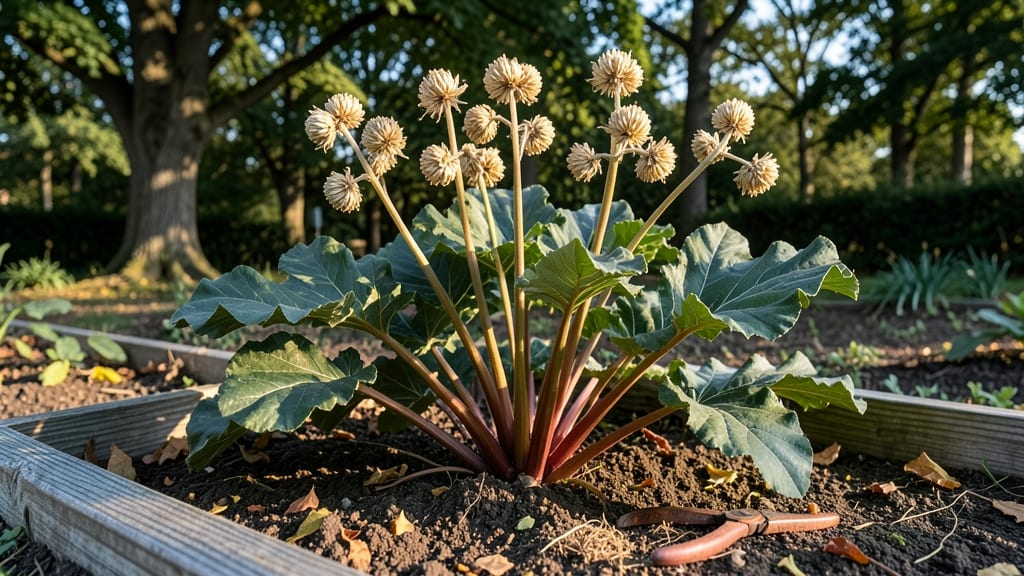
Rhubarb seed heads develop when the plant shifts its energy from producing edible stalks to creating flowers and seeds, which weakens growth and reduces your harvest. Cutting off these flower stalks early stops seed formation and redirects energy back to sweeter, larger stalks.
When rhubarb plants bolt—meaning they send up flower stalks—they're essentially preparing to reproduce instead of growing the stalks you harvest. 🌱 This shift happens more often in older plants or when conditions like heat stress or inconsistent watering trigger it.
The good news? By snipping off those flower stalks within a week of appearance, you force the plant to focus on what matters: producing more of those tart, vibrant stalks you love in pies and compotes.
This simple act of pruning can double your yield—literally. Plants that aren't sapped by seed production grow thicker, more abundant stalks with deeper color. Just be sure to use clean, sharp shears and remove the entire stalk down to the base to prevent regrowth.
For extra insurance, consider applying a balanced fertilizer after pruning to give your rhubarb the nutrients it needs to bounce back strong.
💡 In This Article
- How Rhubarb Flowering Affects Plant Energy
- Best Techniques to Remove Rhubarb Seed Heads
How rhubarb flowering affects plant energy
When rhubarb plants produce seed heads, they're undergoing a dramatic metabolic shift from vegetative growth to reproductive mode. This transition is triggered by hormonal changes, primarily an increase in florigen, a flowering hormone produced in leaves when exposed to specific light and temperature conditions.
Once florigen reaches critical levels in the plant's meristem (growth centers), it signals the plant to prioritize flower and seed development over stalk production, which can reduce your harvest by up to 30-50% in severe cases.
The plant's energy allocation becomes starkly visible in this process. Normally, 60-70% of a rhubarb plant's resources go toward growing edible stalks, with the rest supporting leaves and roots.
But when bolting occurs, that ratio flips dramatically—up to 80% of energy may shift to flower stalks, leaving fewer nutrients for stalk development.
You'll notice this in the stalks themselves: they become thinner, more fibrous, and less sweet as the plant diverts sugars and starches to the developing seed heads. 🌿 The visual difference is striking—healthy stalks are plump and vibrant, while those from flowering plants often appear leggy and pale.
Light exposure plays a crucial role in triggering this process. Rhubarb is a long-day plant, meaning it detects increasing daylight hours (typically 14+ hours of light) as a signal to flower.
This is why seed heads appear more frequently in northern climates during late spring or early summer when days lengthen. Temperature also factors in—consistent 60-70°F daytime temperatures with cooler nights create ideal conditions for bolting.
Stress from drought, poor soil, or transplant shock can further accelerate this process, as the plant perceives these conditions as signals to reproduce before potential death.
Older rhubarb plants are particularly prone to bolting because their energy reserves shift naturally toward reproduction as they mature. A 3-5 year old plant may produce seed heads more readily than a younger one, as its root system has accumulated sufficient starch reserves to support both growth and reproduction.
This is why gardeners often recommend dividing established rhubarb plants every 4-5 years—it rejuvenates the plant and delays the onset of bolting by several seasons. The trade-off is clear: plants that focus on reproduction sacrifice their harvest potential, often producing 20-40% fewer edible stalks during the flowering period.
Here's what's happening at the cellular level: Flowering triggers a cascade of genetic expressions that convert meristem cells from stalk-producing to flower-producing. The plant's vascular system redirects water and nutrients through new pathways, creating the visible flower stalk. This process isn't just about energy—it's about resource prioritization.
The plant essentially makes a calculated decision: "Should I grow more food for humans, or create seeds for next generation's survival?" In most garden scenarios, the answer becomes "seeds," unless you intervene with pruning. 🌱
The timing of this shift is fascinating. Rhubarb plants often begin producing flower stalks in their second or third year, but the actual seed heads may not appear until late spring. This delay gives gardeners a critical window—typically 4-6 weeks—to remove emerging flower stalks before they fully develop.
The key is acting quickly: once the flower bud opens, the plant has already committed significant resources to reproduction, making it much harder to recover stalk production for that season.