Pruning
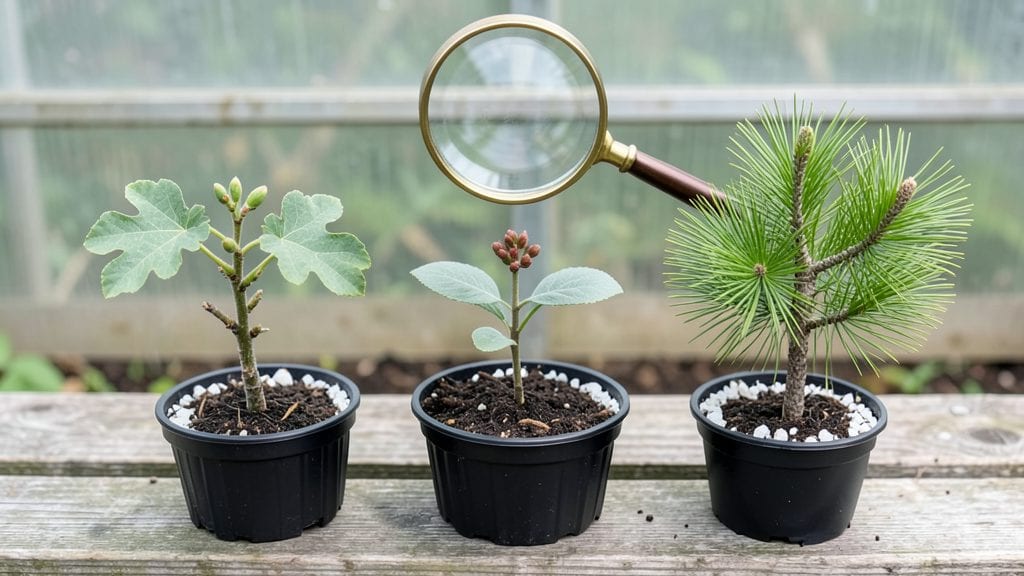
Mastering tree seedling identification transforms a tangle of sprouts into your future forest’s first chapter—here’s how I decode them in three simple steps. 🌱 texture, and how the plant grows.
A single misstep here could mean planting an invasive species instead of a native oak—or worse, killing something you thought was a sapling.
Start with leaf shape: oak seedlings have lobed leaves, maples have pointed edges, and pines have needle clusters. Next, check the stem—smooth bark on birch, fuzzy on willow—and the growth pattern (fast-spreading vines vs. upright shoots).
Most gardeners overlook the roots, but their shape reveals whether you’re dealing with a weed or a future shade tree.
You’ll quickly spot the differences between a white pine’s soft needles and a red maple’s jagged edges. Once you recognize these patterns, you’ll confidently match seedlings to your climate and soil. This isn’t just about naming plants—it’s about growing the right ones for your land.
For tricky cases, pull out a field guide or use a free plant ID app to cross-check. The more you practice, the faster you’ll recognize seedlings on sight. Now, let’s get those young trees identified before they outgrow your yard.
What Triggers Identification Confusion
Misidentifying tree seedlings—especially those that look eerily similar at first glance—often stems from a mix of biological and human factors. Understanding these causes can help you sharpen your eye and avoid costly mistakes in gardening, reforestation, or landscaping. Here’s why it happens:
Many tree species belong to the same family or genus, meaning their early growth stages can look nearly identical.
For example: - Oaks (Quercus spp.) and Hickories (Carya spp.) both produce lobed leaves and acorn-like fruits, making them hard to distinguish until they mature. - Maples (Acer spp.) and Ashes (Fraxinus spp.) can have similarly shaped compound leaves, but their vein patterns and leaflet arrangements differ subtly. - Pines (Pinus spp.) and Firs (Abies spp.) both have needle-like foliage, but their needle arrangement (bundled vs. flat) and cone structures vary.
Why it matters: Without close inspection, these similarities can lead to mislabeling, especially when seedlings are young and lack defining features like bark texture or flower structures.
Seedlings go through rapid changes as they grow, and missing these stages can derail identification.
For instance: - First Year: Leaves may be simple (one blade) or compound (multiple leaflets), but this can change as the seedling ages. - Second Year: Bud shapes, twig arrangements, and early bark formation become more pronounced—but only if you revisit the plant. - Third Year+: Flowering or fruiting structures (like acorns, cones, or samaras) often provide definitive clues, but these take time to appear.
Actionable tip: Track seedlings over seasons! Take photos at different growth stages to spot subtle shifts in leaf shape, stem hairiness, or bud scales.
Drought, poor soil, or pest damage can alter a seedling’s appearance, making it harder to match with reference guides.
For example: - Stunted Growth: A healthy Sugar Maple (Acer saccharum) seedling has smooth edges and opposite branching, but stress can cause irregular leaf shapes or stunted stems. - Discolored Leaves: Fungal infections or nutrient deficiencies might turn leaves yellow or brown, obscuring their natural color (e.g., a White Oak (Quercus alba)’s lobed, bristle-tipped leaves). - Unusual Leaf Arrangement: Herbivores or wind damage might twist stems, making a seedling’s typical alternate or opposite leaf pattern harder to spot.
Pro tip: Compare stressed seedlings to healthy counterparts in controlled settings (like nurseries) to train your eye for "normal" vs. "abnormal" traits.
Not all identification guides cover juvenile forms of trees—many focus on mature specimens.
Common pitfalls include: - Field Guides Skipping Seedlings: Some books lump "tree" identification under "mature trees," leaving gaps for early-stage growth. - App Limitations: While apps like LeafSnap or PictureThis are helpful, they often rely on crowdsourced data, which may lack precision for seedlings. - Regional Bias: A guide for Pacific Northwest trees might not accurately describe a Southern Live Oak (Quercus virginiana) seedling’s subtle differences.
Solution: Cross-reference multiple sources, including:
- USDA Plant Database (filter by seedling traits).
- Local arboretum resources (they often have juvenile specimen collections).
- Forums like Reddit’s r/whatsthisplant for peer verification.
Even with the right tools, hurried identification leads to errors.
Common mistakes: - Superficial Scanning: Glancing at a seedling’s leaf shape without checking: - Leaf base (heart-shaped vs. wedge-shaped). - Stem attachment (alternate vs. opposite). - Underside texture (hairy vs. smooth). - Ignoring Non-Leaf Clues: Bark ridges, bud scales, or root structures (e.g., Black Walnut (Juglans nigra) seedlings have a distinct "juglone" scent when crushed). - Seasonal Blind Spots: Assuming a seedling is a Sweetgum (Liquidambar styraciflua) because of star-shaped leaves—without realizing those only appear in fall!
Memory hack: Use the "5-Second Rule"—spend at least 5 seconds examining each trait (leaf, stem, bud) before tentatively identifying.
Some tree species have cultivars or natural hybrids that blur lines.
For example: - Red Maple (Acer rubrum) seedlings can vary wildly in leaf color (red, green, or yellow) and lobing depth. - Eastern White Pine (Pinus strobus) vs. Scots Pine (Pinus sylvestris): Their needle bundles (5 vs. 2 needles) differ, but hybrids might show intermediate traits.
Research tip: Check USDA PLANTS Database or NC State Extension for known variations in your region.
A seedling’s traits can shift based on climate and elevation. For instance:
- Quaking Aspen (Populus tremuloides) seedlings in dry regions might have smaller leaves than those in wetter areas.
- Douglas Fir (Pseudotsuga menziesii) seedlings at higher elevations may grow slower, altering their needle length or cone shape.
Localize your approach: Study seedlings from your specific ecoregion (e.g., Appalachian vs. Great Plains varieties).
Tree seedling identification is a multi-step puzzle that combines botany, patience, and environmental awareness. The good news? Once you recognize these common pitfalls, you’ll start noticing the details that separate a Sweetgum from a Tulip Poplar (Liriodendron tulipifera)—or a White Pine from a Eastern Hemlock (Tsuga canadensis).
Next step: Grab a magnifying glass, a notebook, and a healthy dose of curiosity. The more you observe, the clearer the distinctions become! 🌿🔍
Fixing Common Seedling ID Mistakes
Misidentifying tree seedlings can lead to poor planting decisions, wasted resources, or even harm to local ecosystems. The good news? Most mistakes are easy to correct with the right approach.
Below, we break down common issues—like confusing similar species, overlooking key traits, or misjudging growth stages—and provide practical fixes to ensure accurate identification every time. Plus, we’ll share prevention tips to avoid repeats.
Cause: Many young trees share basic features (e.g., lobed leaves, thorns, or compound foliage), making them hard to distinguish at first glance. For example, oak and hickory seedlings can look nearly identical until their leaves mature.
How to Fix It:
- 🔍 Compare Leaf Arrangement & Shape:
- Oak seedlings often have bristly edges on leaves and may grow in clusters.
- Hickory seedlings typically have smoother, more elongated leaves with a distinct "hand-like" shape.
- 🌱 Check for Bud or Bark Patterns:
- Oaks usually have terminal buds (at the tip of branches), while hickories may have lateral buds along stems.
- Young hickory bark often has vertical stripes, whereas oak bark is smoother until later stages.
- 📏 Measure Growth Habits:
- Use a ruler to compare leaf size—oaks often have smaller, rounder leaves (1–4 inches), while hickories can reach 4–8 inches.
💡 Pro Tip: Take close-up photos of the seedling’s leaf underside, stem texture, and any emerging buds. These details are often the game-changers in ID!
Cause: Focusing only on leaves or ignoring other parts (like roots, flowers, or seed pods) leads to guesswork. For instance, maple seedlings are easy to spot by their opposite branching, but beginners might overlook this if they only glance at the leaves.
How to Fix It:
- 🌿 Examine the Whole Plant:
- Look for leaf arrangement (alternate vs. opposite).
- Check for thorns (common in hawthorn or black locust seedlings).
- Search for seed pods or fruit—even if small—like the samara (winged seed) of a birch.
- 👨🍳 Use a Field Guide or App:
- Apps like PictureThis or LeafSnap let you upload photos for instant ID matches.
- Carry a compact field guide (e.g., Peterson Field Guide to Trees) for quick cross-referencing.
- ⏰ Observe Over Time:
- Some traits (like bark texture or flower color) only appear in spring or fall. Plan to revisit seedlings seasonally.
🌡️ Pro Tip: If you’re stumped, dig up the seedling carefully (if possible) to inspect the root structure. Some species, like willows, have deep taproots, while others, like aspens, spread via suckers.
Cause: Young trees change rapidly. A pine seedling might look like a spruce until its needles develop into bundles of 2–5 (vs. spruce’s single needles). Similarly, dogwood seedlings can resemble serviceberry until their flower buds appear.
How to Fix It:
- 📊 Create a Growth Timeline:
- Research when key traits (like flowers or cones) typically appear for your region’s common species.
- Example: Red maple seedlings develop red samaras by age 2, while
- 🔪 Prune Strategically (If Needed):
- If a seedling is too young to show defining traits, gently prune a few leaves to expose the stem nodes or bud scales.
- 🚨 Warning: Avoid over-pruning—only remove what’s necessary for ID.
- 🎯 Consult Local Experts:
- Post photos in gardening forums (e.g., Gardeners.com) or ask at nurseries—they often see seedlings daily and can spot subtle clues.
✨ Pro Tip: Keep a seedling journal with dates, photos, and notes on changes. Over time, you’ll recognize patterns unique to each species.
Once you’ve mastered the fixes, prevent future mistakes with these habits:
- 📅 Plant in the Right Season: Spring or early fall gives seedlings time to show key traits before winter.
- 🌍 Know Your Region: Focus on native species first—non-natives (like eucalyptus) have distinct but less common traits.
- 📸 Document Everything: Label seedlings with flags or tags and snap photos monthly.
- 🌱 Start with Easy Species: Begin with birch, maple, or oak seedlings—their traits are more forgiving for beginners.
- 🔄 Cross-Check with Multiple Sources: Use apps + field guides + expert opinions to confirm IDs.
With these solutions, you’ll go from guessing to knowing—turning every seedling into a confident ID win! 🌳🔍
Frequently asked questions
How do I tell the difference between oak and hickory seedlings?
Look at the leaf edges and arrangement: oak seedlings have bristly leaf edges and often grow in clusters, while hickory leaves are smoother with a "hand-like" shape. Check the buds too—oaks have terminal buds, while hickories have lateral buds along stems.
What’s the best way to identify pine vs. spruce seedlings?
Pine seedlings have needles in bundles of 2-5 (like little clusters), while spruce needles grow singly around the branch. Also, pine needles are softer and more flexible, while spruce needles are sharp and stiff. Examine the cones too—pine cones are larger and woody.
Can I use a phone app to identify tree seedlings?
Yes! Apps like LeafSnap or PictureThis work well for seedlings, but they’re most accurate when you capture clear photos of leaves, stems, and buds. For tricky cases, combine app results with a field guide or ask local experts.
Why do my seedlings look different than the pictures in books?
Seedlings change rapidly—leaf shape, bark texture, and growth patterns evolve as they mature. Stress from drought or pests can also alter appearance. Compare your seedlings to healthy examples in nurseries or consult regional guides for accurate matches.
Is it safe to dig up seedlings to check their roots?
Only if absolutely necessary—handle roots gently to avoid damaging them. Some species (like willows) have deep taproots, while others (like aspens) spread via suckers. If you must dig, replant carefully and monitor recovery.