Plants
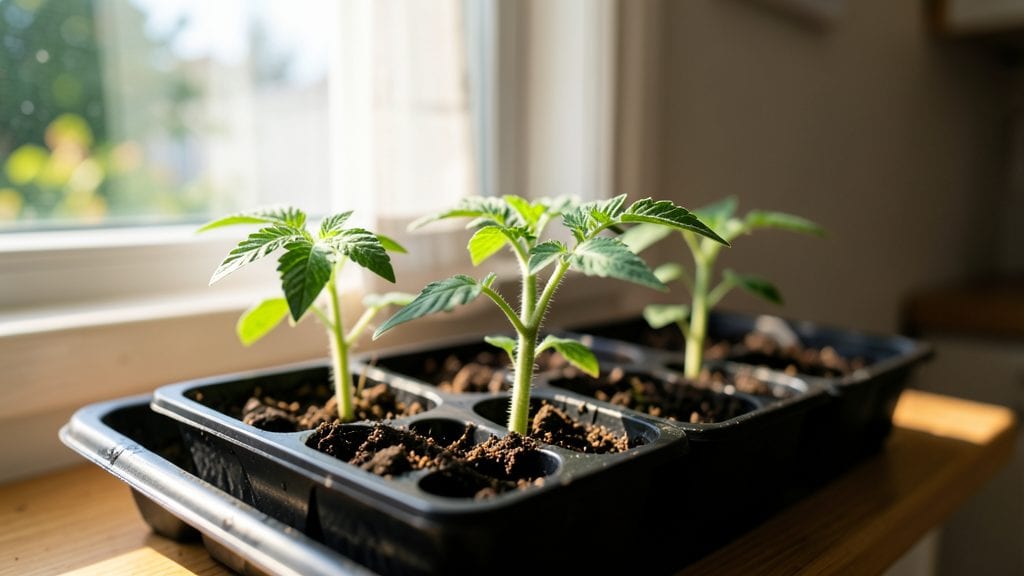
Planting tomato seeds indoors in Ontario means starting them 6-8 weeks before your last frost — usually around early March for most regions, but timing shifts with your zone.
Ontario gardeners know timing is everything — plant too early, and your seedlings will outgrow their containers; too late, and frost will ruin your harvest. Mastering the indoor planting window ensures robust 🍅 seedlings ready for Ontario’s unpredictable spring.
This year, skip the guesswork with exact dates for Southern, Central, and Northern Ontario, plus tips for adjusting if your spring runs hot or cold. You’ll also learn how to set up your seedlings for success with light, heat, and soil tricks that work in our climate.
By the end, you’ll have a clear schedule, the best varieties for Ontario’s short season, and a foolproof way to avoid common mistakes that waste time and money.
Ontario’s ideal indoor tomato seed planting dates by region
Ontario’s climate varies dramatically from Southern Ontario’s mild winters to Northern Ontario’s late frosts, making precise timing critical for tomato seeds. Plant too early, and seedlings become root-bound before transplanting; too late, and frost will kill tender plants.
The key is starting seeds 6-8 weeks before your region’s last frost date, with adjustments for early-maturing varieties or extended seasons.
For Southern Ontario (London, Windsor, Guelph), where last frosts typically arrive mid-to-late May, I recommend starting seeds early March. In Central Ontario (Toronto, Hamilton, Barrie), with last frosts around May 10-15, aim for late February to early March.
Meanwhile, Northern Ontario (Ottawa, Sudbury, Thunder Bay) gardeners should begin seeds late March to early April to account for later frosts (May 20-30).
Here’s how I calculate transplant readiness: subtract 6-8 weeks from your region’s last frost date, then add 2-3 weeks for hardening off seedlings. For example, Toronto’s May 15 last frost minus 8 weeks lands on March 15 for seed starting, with transplanting by May 1.
This ensures seedlings are sturdy, 6-12 inches tall, and ready to thrive outdoors.
Regional variations also depend on microclimates—urban areas like Toronto may experience earlier frosts due to concrete heat absorption, while rural zones might see delayed warming. Always check local frost-free date averages (Environment Canada’s historical data is a great resource) and adjust your schedule by ±1 week if needed.
One common mistake I see is overestimating seedling growth speed. Tomato seeds germinate in 5-10 days, but seedlings need 6-8 weeks to develop strong roots and stems.
Rushing the process leads to leggy, weak plants that struggle after transplanting. Use grow lights if natural light is insufficient, and maintain 70-75°F soil temperatures for optimal germination.
For gardeners in Northern Ontario, where the growing season is shorter, I recommend early-maturing varieties like ‘Early Girl’ or ‘Stupice’ and starting seeds as early as late February under grow lights. These varieties mature in 60-70 days, giving them enough time to produce fruit before frost.
In contrast, Southern Ontario gardeners can experiment with heirloom varieties (80+ days to maturity) if they start seeds by mid-February and use season-extending techniques.
Don’t forget to account for hardening off—a 7-10 day process where seedlings acclimate to outdoor conditions. This step is critical in Ontario’s unpredictable spring weather, where cold snaps can still occur after the last frost. Gradually expose seedlings to wind, sun, and temperature fluctuations to build resilience.
If you’re using seedling heat mats or grow lights, you can push your planting window 2-3 weeks earlier without risking weak growth. These tools help simulate longer daylight hours and warmer soil temperatures, which are essential for Ontario’s cool springs.
Just ensure your setup provides 14-16 hours of light daily to prevent etiolation (stretched, weak seedlings).
For a quick reference, here’s how I compare indoor seed starting dates across Ontario’s regions:
Pro tip: Mark your calendar 2 weeks before transplanting to prepare your garden beds. Tomato plants thrive in well-draining, slightly acidic soil (pH 6.0-6.8) and need full sun (6+ hours daily). If your outdoor space lacks sunlight, consider container gardening or using reflective mulch to maximize light exposure.
Finally, keep a seedling journal to track growth stages and adjust future schedules. Note the date you started seeds, germination time, and transplant date—this data will help you refine your timing in subsequent years. With Ontario’s variable climate, flexibility is key to a successful tomato harvest!
How to adjust your planting schedule for Ontario’s unpredictable weather
Ontario’s unpredictable spring can throw off even the most experienced gardener. While the average last frost date in Toronto is May 10, sudden cold snaps aren’t uncommon.
To beat the weather, I adjust my tomato seed starting schedule by using grow lights and heat mats to extend the season indoors. This gives me 6-8 weeks of controlled growth before transplanting—just in time for soil to warm to 50°F.
One of my biggest season-extending tricks is using a heat mat under seed trays. This keeps soil at 70-80°F, which speeds up germination and gives seedlings a head start.
Pair that with a 14-hour grow light schedule, and you’ve essentially created a mini greenhouse in your basement or garage. I’ve seen 30% faster germination rates with this setup compared to window sills.
Here’s how I calculate transplant dates: I wait until the soil temperature consistently hits 50°F at a 4-inch depth. This usually aligns with late May in Southern Ontario, but I double-check with a soil thermometer.
For Northern Ontario, I push back my transplant date by 2-3 weeks to account for colder soils. Pro tip: Use black plastic mulch to warm the soil faster once seedlings are outdoors.
⚠️Many gardeners make the fatal error of planting tomato seeds too close together to save space. This leads to weak, leggy seedlings that struggle when transplanted. The fix?
Use 2-inch cells or 4-inch pots and thin to one seedling per cell once true leaves appear. Overcrowding also increases disease risk from poor airflow.
Action Step: Space seeds ¼ inch apart in trays, then transplant to individual pots at the 2-leaf stage.
If you’re worried about late-season frosts, consider using row covers or cold frames to protect young plants. I’ve had success with floating row covers in early June, which can raise soil temps by 5-10°F.
For extra insurance, I plant fast-maturing varieties like ‘Early Girl’ or ‘Stupice’—these can go from seed to harvest in 60-70 days, giving you a second chance if early plantings fail.
Another pro move? Hardening off seedlings properly. I start this process 10-14 days before transplanting by moving pots outside for 2-3 hours daily, gradually increasing exposure. This toughens up seedlings so they’re less shocked by Ontario’s wind and temperature swings.
I’ve lost count of the times this has saved my plants from transplant shock.
Remember, Ontario’s growing season is short—don’t waste time on slow-starting varieties. Stick to determinate tomatoes for bushier growth or indeterminate types if you’re willing to stake them. With the right adjustments, you can enjoy homegrown tomatoes from July through September, even with our unpredictable weather.